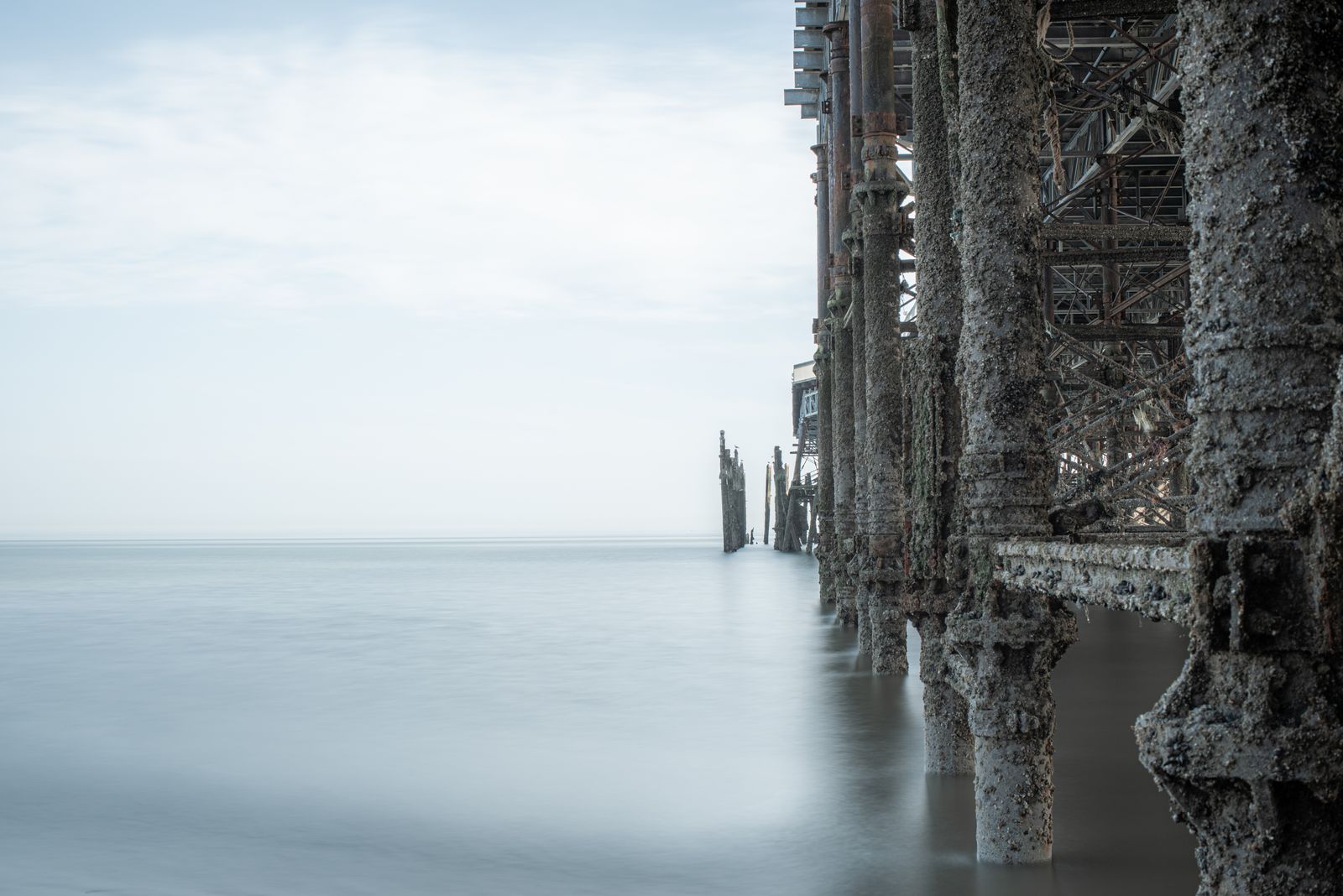
- Corrosion conditions vary within a single coastal asset between immersion, tidal, splash and atmospheric exposure, and the splash zone is among the most severe.
- ISO 12944-2:2017 classifies the environments steel structures are exposed to and their corrosivity, a key factor in choosing a paint system, but the category cannot be set without site data.
- Prioritisation combines the element's condition with the consequence of losing its function or of parts falling, and targeted measurements are chosen for the question being asked, not for what is available.
This article is professional guidance on inspection planning and does not replace assessment by corrosion and structural specialists before any decision affecting the safety of the structure or its users.
Why is “coastal” not a sufficient description?
“Coastal” describes where a structure is, not the exposure each part of it experiences. A single jetty may have submerged piles, sections in the tidal and splash zone, and a deck exposed only to salt-laden air.
The Association for Materials Protection and Performance (AMPP) explains that splash zones and partially submerged sections go through wetting and drying cycles from tides, waves and wicking, and that some of the highest corrosion rates can occur there. Fully submerged concrete may be saturated with chlorides yet not corrode if oxygen is limited. Above the splash zone oxygen is plentiful but chloride levels are usually lower, although sea breezes still add to them. [2]
The practical consequence: an inspection plan starts by dividing the asset into zones, not with a generic list applied to the whole structure.
How do you divide the asset into inspection zones?
First gather the drawings, repair history and the protection system in use, then divide the asset by material (steel, reinforced concrete) and by exposure. For each zone, define what you are looking for and how you will reach it safely.
| Zone | Characteristics | What to look for |
|---|---|---|
| Fully submerged | High chlorides, limited oxygen | Condition of protection, by specialist |
| Tidal and splash | Repeated wetting and drying | Spalling, rust, exposed steel |
| Above splash zone | Ample oxygen, fewer chlorides | Coating damage, water traps |
| Connections and details | Moisture and salt build-up | Local corrosion at joints |
Pay particular attention to details: connections, the bases of supports, horizontal surfaces where water collects, and changes of section. Local corrosion at these points can run well ahead of general deterioration.
What should you look for in steel and in reinforced concrete?
Steel
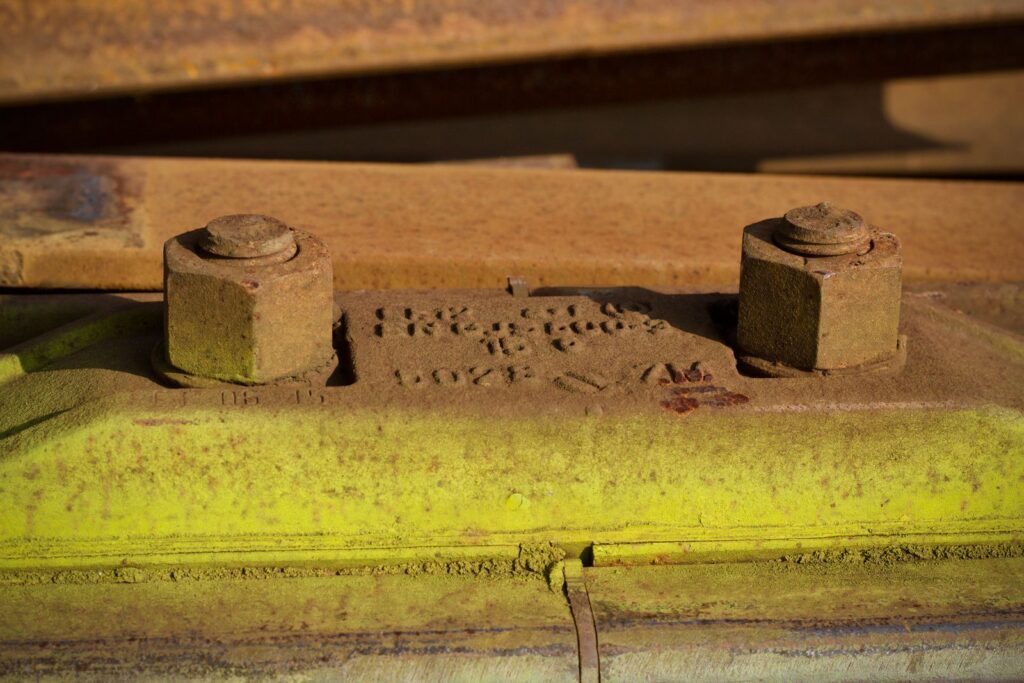
Record coating condition, places that trap water, and corrosion at connections and bolts. AMPP describes coatings as the first line of defence against materials degradation, and says regular coating inspection serves two purposes: confirming they were applied correctly, and revealing existing corrosion so that repair or monitoring can be recommended. [3] Choose the measurement method for the question; if the question is metal loss, thickness readings at documented points are better than a visual estimate.
Reinforced concrete
Chlorides penetrate porous concrete and move towards the reinforcement by capillary action and diffusion, and once they reach it in high concentration they can break down its protective passive film. How quickly this happens depends on exposure conditions, salt levels, concrete durability and cover. [2]
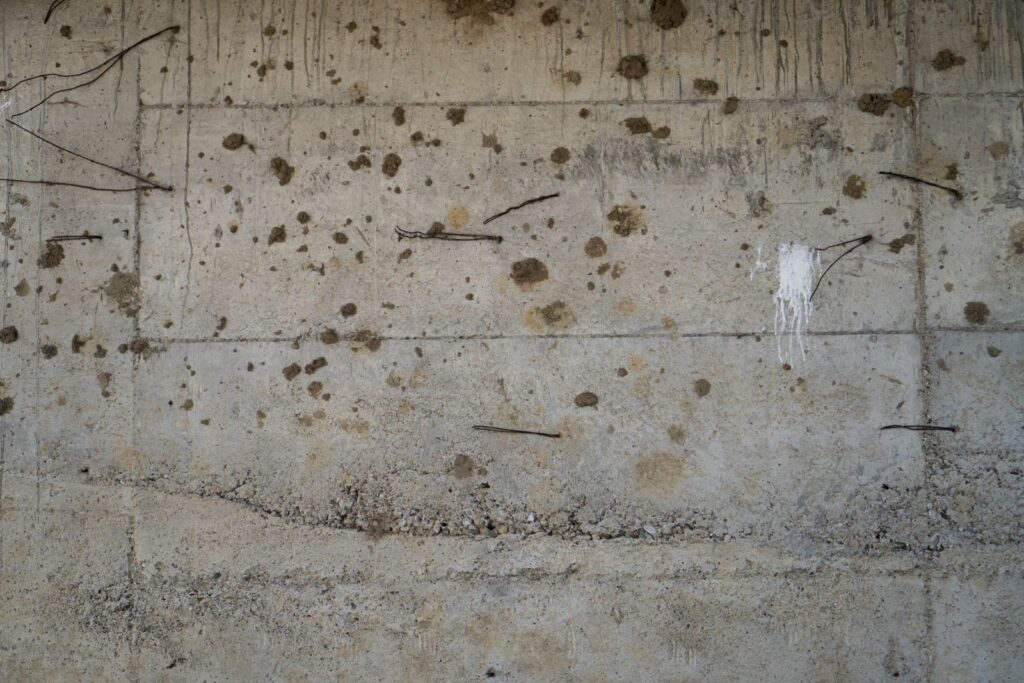
Record cracking, spalling, rust staining and exposed reinforcement, and use the visual survey to choose locations for further testing. The US Federal Highway Administration (FHWA) protocol for half-cell potential testing describes the method as a way to assess the probability of active corrosion, but notes that it does not indicate the corrosion rate, that readings depend on cover, concrete permeability and moisture, and that results should be checked against other non-destructive methods. [4] The protocol adds that combining these readings with concrete resistivity measurements may help interpretation. [4] A specialist testing programme is therefore needed when you need to know how far the damage extends.
What does ISO 12944-2 classification add?
ISO 12944-2:2017 classifies the main environments to which steel structures are exposed and rates their corrosivity. It defines atmospheric corrosivity categories based on mass or thickness loss of standard specimens, describes environments for structures immersed in water or buried in soil, and covers special corrosion stresses that can accelerate corrosion or place greater demands on the paint system. [1]
The standard states that the corrosion stresses associated with an environment are a key factor in selecting a protective paint system. [1] But it does not replace site data: use project documents and site measurements or records before assigning a category. The ISO page shows that the standard was last reviewed and confirmed in 2023 and is marked for revision, so check the current edition when writing a specification. [1]
When writing a coating specification, state the category chosen for each zone and the basis for it: measured data, past performance records on site, or a documented estimate. A specification that says only “marine environment” leaves the contractor an interpretation that may not match what the owner had in mind.
ISO 12944 deals with steel protected by paint systems; marine reinforced concrete needs its own assessment of cover, reinforcement and chloride exposure.
How do you set priorities?
Priority is not the same as “worst-looking”. An element that looks badly deteriorated in a closed area may rank below a less deteriorated one above a walkway used every day. Each decision should combine the element’s condition with the consequence of its failure: parts falling on users, loss of an operational function, or damage spreading to adjacent elements.
- 1ZoningBy material and exposure
- 2Gather recordsDrawings, repairs, protection system
- 3Visual surveyRecord features and hidden areas
- 4Targeted measurementsChosen for the question asked
- 5Assess consequenceUser safety and continued function
- 6DecisionMonitor, repair or specialist assessment
For every high-priority element, write a specific decision: monitoring by repeat measurements, local repair, or specialist assessment of the extent of damage before any work. Record the measurement point, method and instrument so the next visit can make a valid comparison.
Hypothetical example: rust at the base of a support
On a hypothetical Gulf jetty, rust appears at the base of a steel support next to a walkway used daily by staff. The asset team ranks the location as high priority, not because of how it looks but because of what falling parts or loss of the support’s function would mean for people passing beneath, and temporarily restricts access.
The team requests a safe inspection of the hidden part of the base, with thickness readings at documented points. It then checks similar supports in the same zone before tendering any coating work, because recurrence changes the scope. The example shows how priority combines asset condition with the consequences of failure; it does not identify a general cause of rust on any jetty.
What goes into the inspection record?
A record that does not link each finding to its zone and consequence does not help with prioritisation. A simple table, completed for each element, is enough:
| Zone | Element | Finding | Measurement and point | Possible consequence | Decision |
|---|---|---|---|---|---|
| Splash | Support 4 | Rust at base | Thickness at P1 and P2 | Staff walkway beneath | Inspect hidden section |
| Above splash | Connection 12 | Local coating damage | None | Limited | Monitor at next visit |
Record clearly what was not inspected and why: parts under water, areas needing scaffolding or work over water, or covered surfaces. A documented gap gets planned into the next visit; an unrecorded one is forgotten. Work over or near water needs a safety plan and a permit to work under the facility’s system before inspection begins.
What are the protection options, and when is a specialist needed?
For steel, the corrosivity category of each zone is an essential input when choosing a protective paint system. [1] For salt-contaminated reinforced concrete, AMPP describes cathodic protection as the preferred method and cites a 2001 FHWA report stating that it is the only rehabilitation technique proven to stop corrosion in such concrete. [2]
Cathodic protection comes in two forms: impressed current from an external power source, or sacrificial galvanic anodes of zinc, aluminium or magnesium. For impressed current systems, AMPP recommends a good monitoring system with regular maintenance. [2] Selecting and designing a system is specialist work that depends on the structure’s condition and analysis of its system, and cannot be settled from a visual inspection alone.
Conclusion
Divide a coastal asset by material and exposure, choose measurements for the question being asked, and set priorities by combining the element’s condition with the consequence of its failure. Refer cathodic protection decisions and structural assessment to specialists.
Frequently asked questions
Is describing a site as coastal enough to choose a protection system?
No. Classifying the environment requires knowing the actual exposure of each part of the structure, and ISO 12944-2 treats environmental corrosivity as a key factor in selecting a paint system. [1]
What does rust staining on a concrete surface mean?
It is a sign that calls for inspection to find the source and extent of damage; it may point to reinforcement corrosion after chlorides have reached the steel, but on its own it does not show the size of the problem.
Does half-cell potential testing show the corrosion rate?
No. It estimates the probability of active corrosion, not its rate, and readings are affected by cover depth, concrete permeability and moisture, so they are interpreted alongside other methods. [4]
Is fully submerged concrete the most vulnerable to corrosion?
Not necessarily. It may be saturated with chlorides yet not corrode if oxygen is limited, whereas splash zones and partially submerged areas can see some of the highest corrosion rates. [2]
Can thickness readings be compared between any two points?
A comparison over time is valid when the measurement point, method and instrument are documented and the reading is repeated at the same location.
References
- International Organization for Standardization (ISO). ISO 12944-2:2017 Paints and varnishes — Corrosion protection of steel structures by protective paint systems — Part 2: Classification of environments (2017)
- Association for Materials Protection and Performance (AMPP). Protecting Steel-Reinforced Concrete Marine Structures from Corrosion (2023)
- Association for Materials Protection and Performance (AMPP). Measurement and Inspection for Corrosion Control
- Federal Highway Administration (FHWA). LTBP Program Protocols, Version 1: Half-Cell Potential Testing (FHWA-HRT-16-007) (2016)
Recommended programmes