- The investigation starts by recording when, where and under what conditions wetting appears, then tests three hypotheses: a leak from building services, water entering through the envelope, or condensation on a cold surface.
- Water can travel inside a ceiling or wall and appear far from its source, and hidden condensation can be mistaken for a leak, so record what the evidence rules out and what is still being tested.
- A report is closed once the cause is fixed, materials are dried and the area has been checked when the conditions that produced the wetting recur, not once the stain has vanished under paint.
This article is professional guidance on managing an investigation; where there is water near electrical equipment, a visibly affected ceiling or contaminated water, follow safety procedures and call a specialist before inspecting.
Why do investigations fail when they start with the repair?
The usual report arrives as “leak from the ceiling”, so a plumber is sent, then the waterproofing team, then the ceiling is repainted, and then the stain returns. The problem is rarely the quality of the work; it is that nobody identified where the water came from before sending the teams.
The Whole Building Design Guide (WBDG) warns that moisture problems are often misdiagnosed as purely an envelope issue or purely an HVAC issue, when both may be involved. [2] The US Environmental Protection Agency (EPA) moisture control guidance proposes four elements for diagnosis: symptoms, sources, transport mechanisms and control failures. [1]
A good investigation turns the report into hypotheses to be tested and gives one party ownership of the case through to closure.
How do you start the investigation?
Mark the wet areas on a drawing and link each observation to a time, a photograph and the operating conditions. Then ask: does the wetting coincide with rain, with use of a particular fixture, with the air conditioning running, or with very humid days? That timing is one of the strongest clues available at the outset.
A simple log, filled in every time wetting appears, is enough, even when it is security or cleaning staff who spot it out of hours:
| Date and time | Location on drawing | What was seen | Weather | Air conditioning | Fixture use | Photo |
|---|---|---|---|---|---|---|
| (each occurrence) | (location code) | Drips, stain, pooling | Rain, high humidity, dry | On or off | Yes or no | (photo number) |
Ask too about any recent works at or above the location, such as equipment installation or changes to the ceiling or façade; many new water paths begin after works whose details were never finished.
Remember that where the stain appears is not necessarily where the water gets in. EPA guidance notes that rainwater or leaking water can travel a long way along the underside of a floor joist or roof truss before it drips, and that small leaks inside walls and ceiling cavities can continue unnoticed for some time. [1]
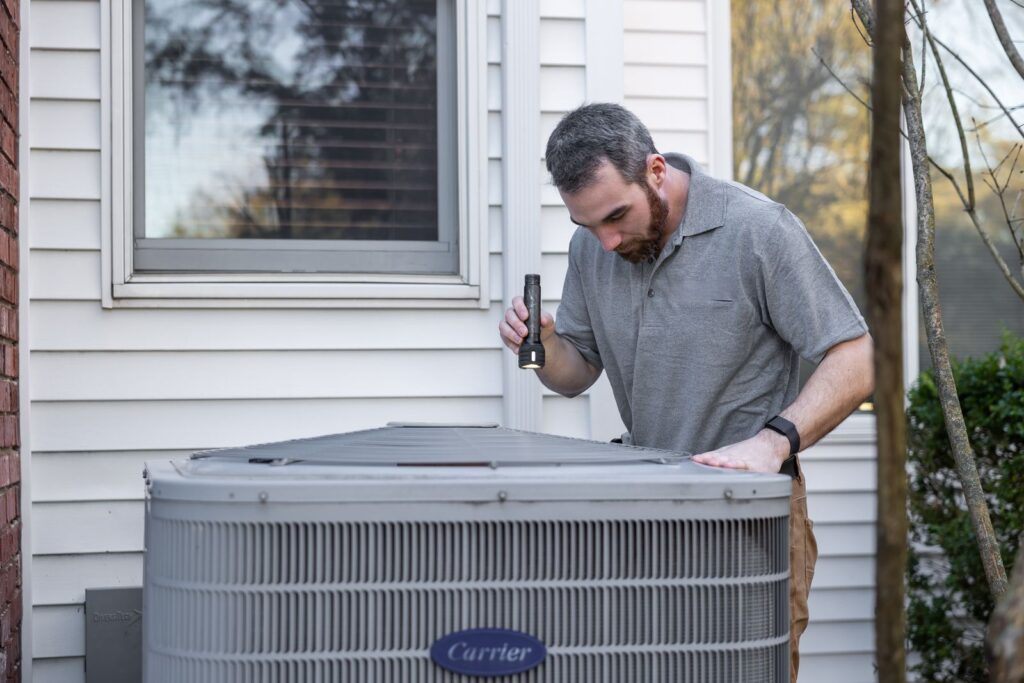
Before inspecting, assess safety: where there is water near electrical panels or equipment, or a visibly affected suspended ceiling, trigger the safety procedure and call the relevant specialist team before going near.
What are the three hypotheses, and how is each tested?
EPA guidance treats liquid water intrusion and condensation as separate principles of moisture control. [1] In practice, every report should test three paths:
| Hypothesis | Initial clue | What the specialist checks |
|---|---|---|
| Water or drainage services | Linked to use, or constant wetting | Pipe route and testing |
| Entry through the envelope | Linked to rain or wind direction | Joints, drains and opening details |
| Condensation | Cold surface and humid air | Surface temperature, dew point, insulation |
- Water and drainage services: supported when wetting follows use of a particular fixture, or persists regardless of the weather. The specialist checks the route and condition of the pipework and tests it.
- The building envelope: supported when wetting follows rain or a particular wind direction. WBDG notes that rainwater leaks are a major source of moisture and fungal growth problems in hot, humid and temperate climates. [2] The specialist checks joints, drainage and the detailing around openings.
- Condensation: supported when wetting appears on a cold surface on humid days or when cooling is running, with no link to rain or use.
More than one path may be involved in a single case. So record what the evidence rules out and what is still being tested, and do not drop one hypothesis just because another looks likely.
When is condensation the answer?
Water vapour condenses when warm, moist air meets a surface colder than that air’s dew point. WBDG explains that where cool surfaces meet warm, moist air is where condensation and excess moisture occur. [2] EPA guidance notes that supply air ducts, diffusers and refrigerant or chilled water lines are much colder than room air, and that condensation inside wall or roof assemblies may be hidden and mistaken for rain or plumbing leaks. [1]
To test this hypothesis, compare the surface temperature with the dew point of the surrounding air under the conditions in which the wetting appears, and check that insulation around cold lines is continuous. WBDG adds that humid outdoor air infiltrating the building can condense on interior surfaces, including inside cavities, and that maintaining proper pressurisation is crucial to keeping it out. [2] It describes the building perimeter as a critical interface between the envelope and the HVAC and control systems. [3]
A thermal image shows differences in surface temperature; reading it needs independent confirmation, such as measuring moisture in the material, before attributing the pattern to water.
What should you do with wet materials?
Finding the source does not mean putting off dealing with the materials. EPA guidance recommends drying porous or moisture-sensitive materials quickly, before mould grows or physical damage occurs. [1] Its guide to mould remediation in commercial buildings sets out strategies for responding to water damage within 24 to 48 hours, and refers materials that have stayed wet for more than 48 hours or show mould to its remediation guidance, while noting that mould will not always grow after 48 hours and that the timeframe is only a guideline. [4]
These guidelines apply to clean water. Where the water may contain sewage or contaminants, the EPA guide calls for personal protective equipment and containment, advises consulting an experienced professional where the team lacks that expertise, and warns against using fans until the water is confirmed to be clean. [4] In the Gulf, the national occupational safety requirements of the country concerned also apply.
Hypothetical example: drips near an air-conditioning unit
In a hypothetical Gulf office building, drips appear on suspended ceiling tiles near an air-conditioning unit, and the report recurs on humid summer days. Instead of sending the waterproofing team, the maintenance supervisor logs when the wetting appears and notes that it is linked neither to rain nor to use of the toilets on the floor above.
The team checks the condensate drainage and finds it sound, then inspects the insulation around a chilled water line above the ceiling and compares its surface temperature with the dew point of the surrounding air. The findings support the condensation hypothesis at a section where the line had been left exposed after earlier works. After the insulation is repaired, the tiles dried and damaged ones replaced, the team monitors the location under similar operating and humidity conditions and records the results before closing the report.
The example illustrates the method only and does not identify a general cause for every stain near air-conditioning units.
How do you document closure?
Closure is a decision that needs a record, not a photograph of a clean ceiling.
- 1Supported causeWhat evidence shows and what was ruled out
- 2RepairWhat was done and by whom
- 3Drying and assessmentWet materials and their condition
- 4Re-verificationUnder conditions like the original wetting
- 5ClosureComplete record, signed by case owner
Record the cause the evidence supports and what was ruled out, what was repaired and by whom, how and under what conditions it was re-verified, and whether materials need drying, replacement or separate assessment. Name one party to follow the case to closure, even when plumbing, HVAC and façade teams have all been involved. And if a report recurs at the same location, open the previous record before sending anyone.
At facilities management level, review closed reports periodically: locations where reports keep recurring, reports closed without re-verification, and cases that passed between several teams before the cause was found. This review shows whether the problem lies in a particular building element that needs wider treatment, or in the way reports themselves are managed.
Conclusion
Treat every leak report as an investigation with three hypotheses: services, envelope and condensation. Record timing and conditions, dry materials promptly, and do not close the report until you have checked how the area behaves under the conditions that produced the wetting.
Frequently asked questions
Does a ceiling stain mean the waterproofing has failed?
Not necessarily. It is a sign that calls for checking the possible paths; the source may be a pipe or condensation on a cold line, and it may appear far from where the water got in. [1]
Is a stain disappearing after repainting enough to close the report?
No. Confirm the source has been dealt with, the materials are dry, and the area behaves normally when the conditions that produced the wetting recur before approving closure.
When is comparing surface temperature with dew point useful?
When condensation on a cold surface is a live possibility, such as supply ducts, diffusers and chilled water lines, which are much colder than room air. [1]
How quickly should wet materials be dried?
US EPA guidance sets out strategies for responding within 24 to 48 hours to prevent mould growth, while noting that this timeframe is a guideline. [4]
What if the conditions that caused the wetting do not recur?
Record the follow-up required, its trigger condition and its date, and keep the outcome open until suitable evidence is available rather than closing the report on an assumption.
References
- U.S. Environmental Protection Agency (EPA). Moisture Control Guidance for Building Design, Construction and Maintenance (2013)
- Whole Building Design Guide (WBDG), National Institute of Building Sciences. Moisture Management
- Whole Building Design Guide (WBDG), National Institute of Building Sciences. HVAC Integration of the Building Envelope
- U.S. Environmental Protection Agency (EPA). Mold Remediation in Schools and Commercial Buildings Guide: Chapter 4 (Table 1, Water Damage)