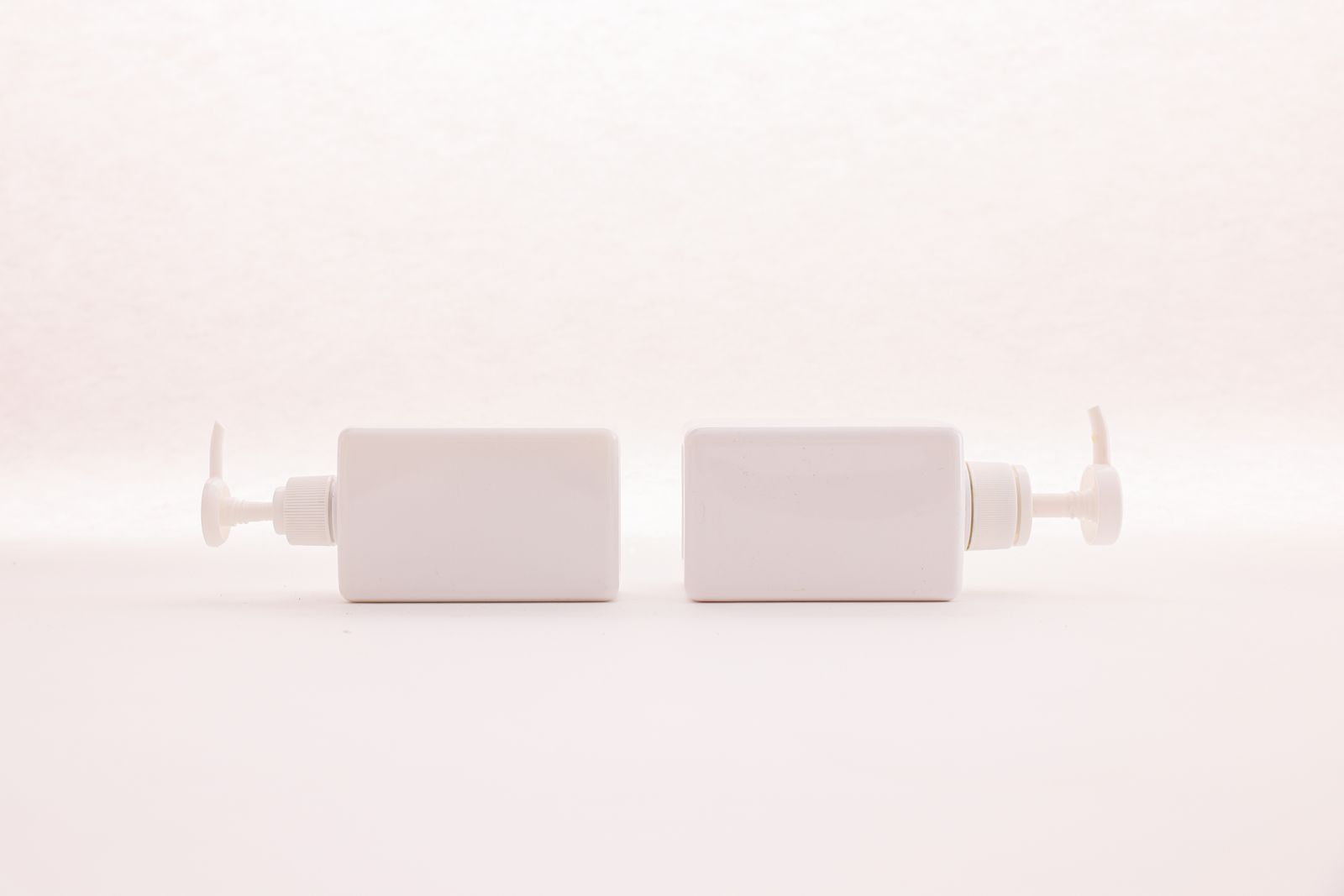
- Test the formula in the pack that will actually be sold, with its cap and pump or spray, under expected storage, transport and use conditions, not only in a laboratory container.
- Compatibility comes down to three questions: does the product interact with the pack, does the pack protect it from light and air, and do substances migrate from the pack into the product.
- Changing the pack supplier or the material of a part in contact with the product is a change that needs assessment and new evidence, even if the formula stays the same.
This article is educational; the test plan, acceptance criteria, safety assessment and responsibility for compliance remain with the business's specialists under the requirements of the market of sale.
Why is a stability result in a laboratory container not enough?
A formula can pass every stability test in an inert glass container and then fail on the market because the pump blocked, the cap leaked or the product changed colour behind a clear pack. What reaches the consumer is not the formula alone but the formula inside the pack, with its closure and dispensing system.
That is why the EU guidelines for the cosmetic product safety report advise running physical tests both in inert containers and in the packs intended for the market, to make sure the type of pack does not cause a stability problem, and assessing stability under reasonably foreseeable storage conditions. [2]
What does pack compatibility mean?
The EU guidelines identify three elements in assessing compatibility: interaction between product and pack, the pack’s barrier properties, and migration of substances from the pack into the formula. [2] These translate into three practical questions:
- Does the product interact with the pack? For example, plastic swelling or discolouring, or a cap cracking on contact with certain ingredients.
- Does the pack protect the product? If the formula is sensitive to light or air and its degradation could affect safety or efficacy, appropriate packaging should be used. [2]
- Do substances migrate from the pack into the product? The guidelines call for considering the relevant characteristics of the packaging material, particularly its purity and stability, because substances may migrate into the formula. [2]
The guidelines also expect the safety assessor to consider possible effects of interaction with the packaging material when evaluating the product. [2] In other words, the pack is not just a marketing or cost decision; it is part of the safety file.

What can differ between two similar packs?
Two packs of the same shape may differ in polymer type, additives, wall thickness, the design of the cap’s inner seal or the pump mechanism. Any of these differences may show up as:
- Leaks when the pack is stored on its side or upside down.
- Weight loss indicating evaporation through the wall or closure.
- An irregular pump dose, or blocking after a period of non-use.
- A change in the product’s colour or odour, or emulsion separation.
Protection is not only about chemistry. FDA explains that heat can break down preservatives and speed microbial growth, that temperature changes, sunlight and air can alter a product’s colour, texture and smell, and that dipping fingers into a product introduces bacteria and fungi. [4] So moving from an open jar to a pump pack, or the reverse, can affect preservation and not just appearance.
- Leaks on side or upside down
- Cap integrity after transport
- Unexpected weight loss
- Consistent dose
- Blocking or sputtering
- Product drawing back into tube
- Pack discolouration or deformation
- Cracking or swelling
- Light effect through the pack
- Colour, odour and texture
- Emulsion separation
- Preservation stability
How do you design a compatibility test?
ISO/TR 18811:2018 does not set test conditions or criteria; it provides a scientific framework for choosing stability test methods, and places responsibility on the manufacturer to define and justify the protocol, including test methods, specifications and conditions, because the variety of products and of storage and use conditions rules out a single assessment method. [1]
In practice, agree before you start on:
- Samples: a batch of the formula in the final pack with all its components, plus a reference sample in an inert container.
- Orientations: upright, inverted and on the side, because a leak may appear only in one position.
- Conditions: what represents real storage, transport and use, not just comfortable laboratory conditions.
- What is monitored: appearance, colour, odour, weight, dose, closure integrity and the condition of the pack itself.
- Acceptance criteria: written before results come in, so they are not tailored to fit the outcome.
FDA’s GMP guidance expects primary packaging materials to be stored and handled so as to prevent contamination or decomposition from heat, cold, sunlight or moisture, and finished products to be tested for adequacy of preservation under reasonably foreseeable storage and use conditions. [3]
How do you allow for Gulf conditions?
Choose conditions that represent the actual supply chain: shipment waiting times, summer transport, storage in warehouses that may not be fully air-conditioned, and then the heat of a consumer’s car or bathroom. Where stability depends on particular storage conditions, the EU guidelines call for that information to be passed along the supply chain and shown on the label where it matters to the user. [2]
In Saudi Arabia, SFDA has adopted the updated Gulf technical regulation on safety requirements for cosmetic and personal care products, SFDA.CO/GSO 1943:2024, and has called on companies to review and comply with the updated regulations. [5] Check the requirements adopted in each market where you sell, and do not assume that a file accepted in one market is sufficient in another.

What should you ask the pack supplier for?
The development team cannot assess migration or interaction without information from the supplier. The EU guidelines describe the useful information on primary packaging in contact with the formula: its composition including additives, technically unavoidable impurities, and possible migration. They note that data on materials designed for food contact can help, as they may include stability and migration information. [2]
Before approval, ask the supplier for:
- A written specification for each part: body, cap, inner seal, pump and dip tube.
- A statement of the material of each part in contact with the product, and any additives or colourants in it.
- Whatever migration data or material compliance declarations it holds.
- A written commitment to notify you in advance of any change of material, plant or mould.
The last item is the one most often missing from contracts, and a common reason why problems appear in a product where nothing changed on the company’s side.
Hypothetical example: a new supplier for a serum pack
Hypothetical example: a company changes the pack supplier for a serum while keeping the formula unchanged, and the new pack matches the old one in shape and capacity. After some weeks in storage, samples kept on their side show leakage, while upright samples do not.
The company compares the closure specification, the pack batch number and the results for the old pack, and holds approval of the change until the cause is found and the test is repeated. It separates two questions, closure integrity and chemical stability of the formula, because a leak may be a purely mechanical problem but may also let air in or allow evaporation that changes the product.
How do you manage a pack change?
- 1Describe the changeMaterial, supplier, design and closure
- 2Estimate the impactContact, protection and use
- 3Test planAcceptance criteria agreed in advance
- 4Assess and decideWith safety and quality experts
- 5Update the fileStability, shelf life and label
Treat any change to the pack, its supplier or the material of a part in contact with the product as a change requiring documented assessment. The EU guidelines note that experience with similar formula and pack combinations is useful, and that new or novel packs may need wider evaluation. [2] They also expect the stability file to show that the tested composition matches the product placed on the market, and the data to support the chosen minimum durability date. [2]
Do not infer shelf life from a short transport trial. FDA notes that determining a product’s shelf life is part of the manufacturer’s responsibility for its safety. [4]
Conclusion
Test the filled system rather than the formula alone, set acceptance criteria before you start, and make test conditions represent the real supply chain. Treat a change of pack or supplier as a product change that needs new evidence before approval.
Frequently asked questions
Is it enough to test the empty pack?
No. Compatibility is a property of the filled system: formula, pack and closure together. The EU guidelines advise running physical tests in inert containers and in the packs intended for the market, to make sure the pack does not cause a stability problem. [2]
Can changing just the cap matter?
It can. The cap determines how well the pack seals, may touch the product and may change how it is used. Review the seal, the contact material and the dose before approving any new cap.
Is there a standard method for testing migration from the pack?
The EU guidelines say there are no standard procedures for cosmetics, and that assessment relies on knowledge of the formula and pack and on expert judgement; data on food-contact materials may help. [2]
Can shelf life be inferred from a short transport trial?
No. A transport trial reveals closure and leakage problems, while shelf life needs stability data that support it for the marketed product itself. [2]
Must every test be repeated for every change?
Set the scope according to the impact of the change. ISO/TR 18811 does not prescribe conditions or criteria, and places responsibility on the manufacturer to define and justify the protocol. [1]
References
- International Organization for Standardization (ISO). ISO/TR 18811:2018 Cosmetics — Guidelines on the stability testing of cosmetic products (2018)
- European Commission (legislation.gov.uk). Commission Implementing Decision 2013/674/EU on Guidelines on Annex I to Regulation (EC) No 1223/2009 on cosmetic products (2013)
- U.S. Food and Drug Administration (FDA). Good Manufacturing Practice (GMP) Guidelines/Inspection Checklist for Cosmetics (2025)
- U.S. Food and Drug Administration (FDA). Shelf Life and Expiration Dating of Cosmetics (2022)
- Saudi Food and Drug Authority (SFDA). «الغذاء والدواء» تعتمد تحديثات جديدة للوائح الفنية الخليجية لتنظيم منتجات التجميل (2025)