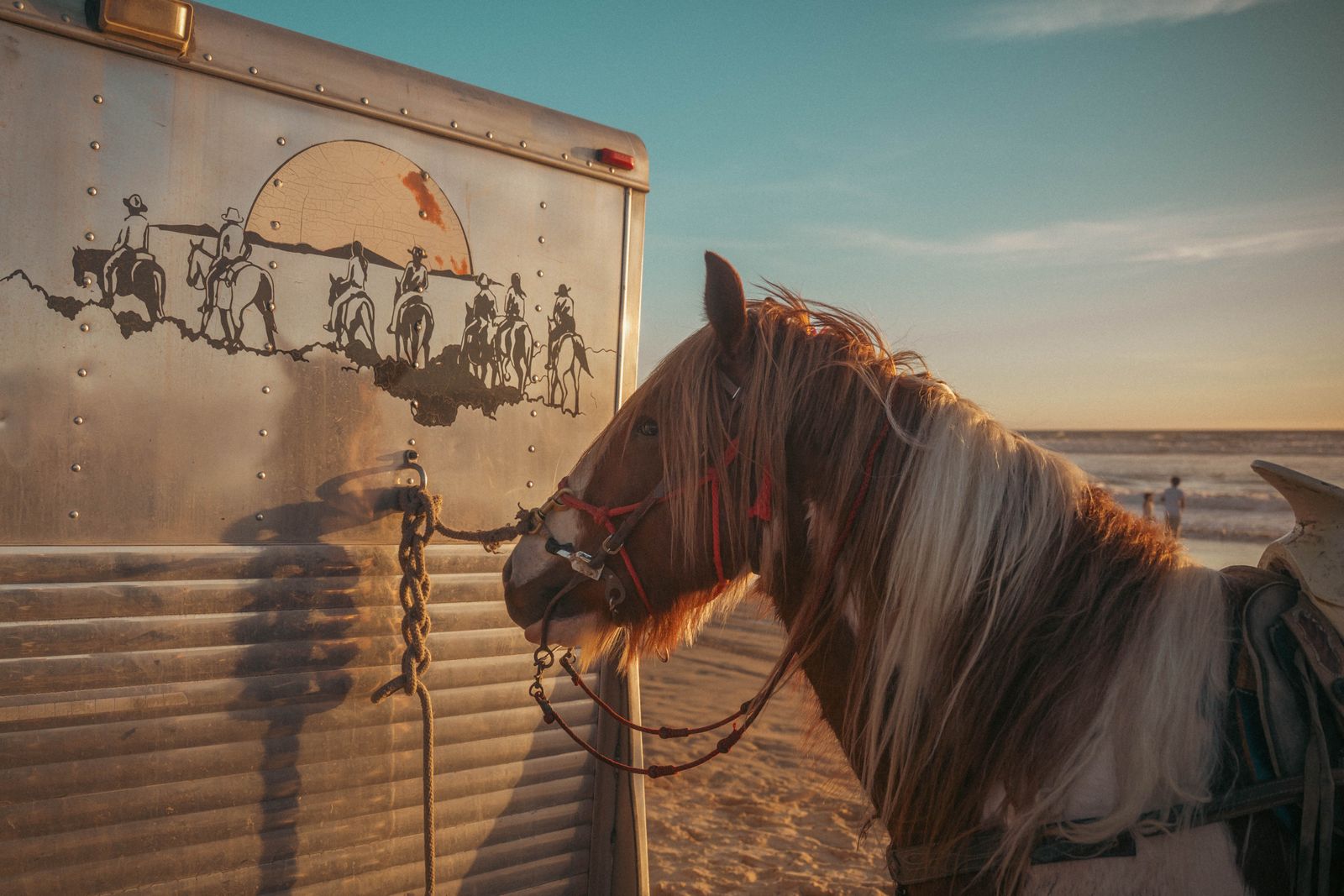
- A safe journey starts before loading: a horse fit to travel, complete documents, a checked vehicle and a route plan with stopping points and an emergency plan.
- The WOAH Code lists animals unfit to travel, including those that are sick, injured or unable to stand unaided, those in the final 10% of pregnancy, and those whose body condition cannot cope with the expected climate.
- The journey does not end at unloading: handover to the receiving stable includes the journey log, observations and monitoring of the horse's health in the following days.
This article is for professional education and does not replace veterinary assessment of each horse or the requirements of the authority regulating domestic, international and event movements.
Who is responsible for horse welfare during transport?
Chapter 7.3 of WOAH’s Terrestrial Animal Health Code divides responsibility among those involved: the owner or manager is responsible for the animal’s fitness to travel, certification and providing a competent handler; handlers are responsible for humane handling and the journey log; and the transport company and driver are responsible for planning the journey, including contingency plans. [1] Competence in the Code means training or experience covering journey planning, handling, assessing fitness, emergencies and record keeping. [1]
The FEI Code of Conduct for the Welfare of the Horse requires horses to be fully protected from injury and health risks during transport, in safe, well-ventilated, well-maintained and regularly disinfected vehicles driven by competent personnel, with competent handlers available at all times. [2] In practice, write down before each journey who monitors the horses and who has authority to stop the journey or change the route.
Using a professional transporter does not hand over all of that responsibility. World Horse Welfare recommends checking the transporter’s experience and training, their insurance and what it covers, including injury or illness of the horse, and their certifications such as certificates of competence, as well as asking for references from previous clients, and notes that the cheapest quote may not be the best option. [4]
What should be checked before departure?
The most important decision is whether the horse is fit to travel. The WOAH Code lists as unfit: animals that are sick, injured, weak, disabled or fatigued; those unable to stand unaided and bear weight on each leg; those blind in both eyes; those that cannot be moved without additional suffering; pregnant animals that would be in the final 10% of gestation at the planned time of unloading; females travelling without young that have given birth within the previous 48 hours; and those whose body condition would result in poor welfare in the expected climatic conditions. [1]
World Horse Welfare suggests practical pre-journey checks: body temperature, any nasal or eye discharge, lameness, current or previous injuries that could worsen in transit, and recent foaling, consulting a vet if in doubt. [3]
- No illness, injury or lameness
- Normal temperature, no discharge
- Not about to foal or just foaled
- Loading behaviour practised
- Horse ID and passport
- Required certificates and approvals
- Journey and emergency plans
- Journey log ready
- Tyres, lights and flooring
- Enough space to balance
- Ventilation works when stationary
- Cleaned and disinfected
- Route and stopping points
- Heat and delays anticipated
- Who monitors, who can stop
- Vet and receiving stable contacts
Animals should not be loaded until the required documents are complete, including the journey and emergency plans, certification, identification and the journey log. [1] World Horse Welfare recommends checking lights, tyres, flooring and the horse area before every journey, even with a hired vehicle, and allowing at least 20 cm of space on each side and at least 75 cm above wither height so the horse can balance. [4]
How do you load horses without stress or injury?
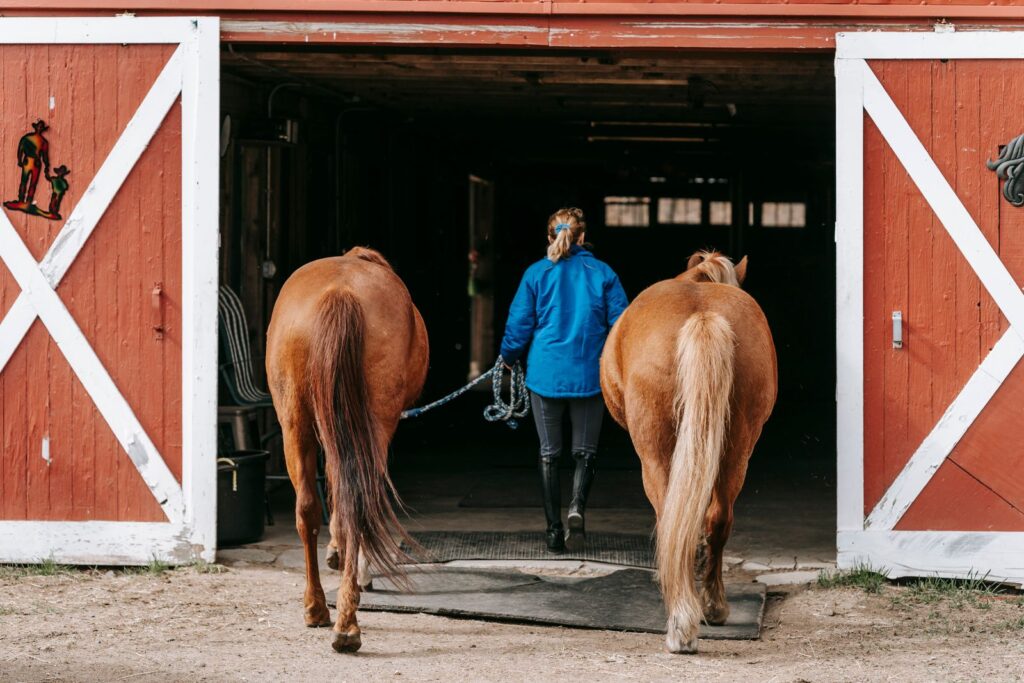
The WOAH Code notes that horses may have had good or bad experiences of loading and that good training makes loading easier. For a difficult horse, two experienced handlers can load it by linking arms or using a strop below its rump, and blindfolding may even be considered. [1] The Code recommends ramps as shallow as possible and steps as low as possible, because horses tend to jump a step when descending, and states that electric goads should not be used on horses. [1]
On arrangement within the vehicle, the Code prefers individual stalls while allowing compatible groups, states that horses travelling in groups should have their shoes removed, and warns that tethers preventing a horse from lowering and raising its head make it prone to respiratory disease. [1] World Horse Welfare advises practising loading, unloading and standing calmly well before the journey, and treats refusal, the need for force or rushing out on unloading as signs that more training is needed. [3]
What should be monitored during the journey?
The WOAH Code recommends checking the load before departure, shortly after setting off and periodically at stops, together with smooth, defensive driving. [1] World Horse Welfare suggests a camera to watch the horse where possible, [3, 4] and, on long journeys, planning water and forage breaks at least every 4 hours. [3] The FEI Code requires journeys to be carefully planned, with regular rest periods and access to food and water. [2]
| Stage | What to check | What to record |
|---|---|---|
| Before departure | Fitness, documents and vehicle | Fitness decision and loading time |
| Loading | Horse calm, ramp safe | Loading time and any difficulty |
| En route | Horses, ventilation and heat | Stop times and observations |
| Delay or emergency | Apply the emergency plan | Cause, action and who decided |
| After arrival | Water, movement and health | Handover and follow-up needed |
If a horse becomes ill or injured en route, the Code calls for the emergency plan to be followed, the animal to be segregated, and treated or humanely killed where necessary. [1] The plan should therefore identify in advance the nearest vet or facility along the route.
What should you do in a delay or emergency?
The WOAH Code expects the journey plan to cover emergency response, including adverse weather, and to plan for waiting time at border crossings. [1] World Horse Welfare recommends sharing the route and expected arrival time with someone who knows what to do in an emergency, and holding breakdown cover that includes horse recovery. [4]
Hypothetical example
A company is moving a group of horses between two sites within a Gulf country on a hot day, and meets an unexpected delay at a checkpoint. The person in charge checks the journey plan, which names a nearby shaded stopping point, a reserve water supply and the on-call vet’s number. They apply the plan, move the vehicle to the designated spot, check the horses and record the length of the delay and their observations.
On arrival, the team hands the journey log to the receiving stable, flagging one horse that looked more fatigued than the others; the stable places it under closer observation and calls the vet to assess it.
What happens after arrival?
The WOAH Code calls for animals to be unloaded promptly and quietly by experienced handlers into suitable facilities, for sick or injured animals to be passed to a veterinarian, notes that increased contact and stress raise infection risk so segregation may be needed, and recommends cleaning vehicles before reuse, with disinfection where there are concerns about disease transmission. [1]
World Horse Welfare recommends unrestricted access to water after arrival, letting the horse stretch its neck and legs, hand grazing or turnout where safe, and close monitoring of behaviour and health. [3] In the context of fitness to compete, the FEI Code calls for additional rest periods to be allowed after travelling. [2]
What does this mean in the Gulf?
Requirements for domestic movement, international transit and event participation vary from country to country, so confirm the approvals and documents required by the competent authority in each country on the route well before the travel date. Do not import numerical limits on journey times or temperatures from a foreign regulation and treat them as locally binding.
Heat is a decisive factor in the region. The WOAH Code treats as unfit an animal whose body condition would result in poor welfare in the expected climatic conditions, [1] and World Horse Welfare recommends that journey planning covers the route, duration, temperature and weather, with backup options. [4] Plan journeys for the cooler parts of the day and identify shaded stops and water sources in advance.
Conclusion
Decide each horse’s fitness before loading, complete the documents and check the vehicle, and write a journey plan that names who monitors, who can stop and whom to call. Monitor the horses en route as planned, and hand the journey log to the receiving stable so assessment continues after arrival.
Frequently asked questions
Is a well-prepared vehicle enough to protect the horse's welfare?
No. The vehicle is one element; you also need to confirm the horse is fit to travel, that staff are competent, and that there is a journey and emergency plan. [1, 4]
Are domestic and international journeys subject to the same requirements?
No. Documents, approvals and procedures vary with the type of movement, the country and the event, and a horse should not be loaded until the required documents are complete. [1]
Who decides to postpone a journey when fitness is in doubt?
Consult a vet whenever there is doubt; an animal unfit to travel should not be loaded except to receive veterinary care. [1, 3]
How often does a horse need water on long journeys?
World Horse Welfare recommends planning water and forage breaks at least every 4 hours on long journeys, alongside whatever the regulating authority requires. [3]
What should be kept after the journey?
The journey log, including departure, stop and arrival times, monitoring notes, any incident or emergency action, and what was handed over to the receiving stable. [1]
References
- World Organisation for Animal Health (WOAH). Terrestrial Animal Health Code, Chapter 7.3: Transport of animals by land (2024)
- Fédération Equestre Internationale (FEI). FEI Code of Conduct for the Welfare of the Horse
- World Horse Welfare. Travelling safely: is your horse fit to travel? (2026)
- World Horse Welfare. Travelling your horse safely (2026)