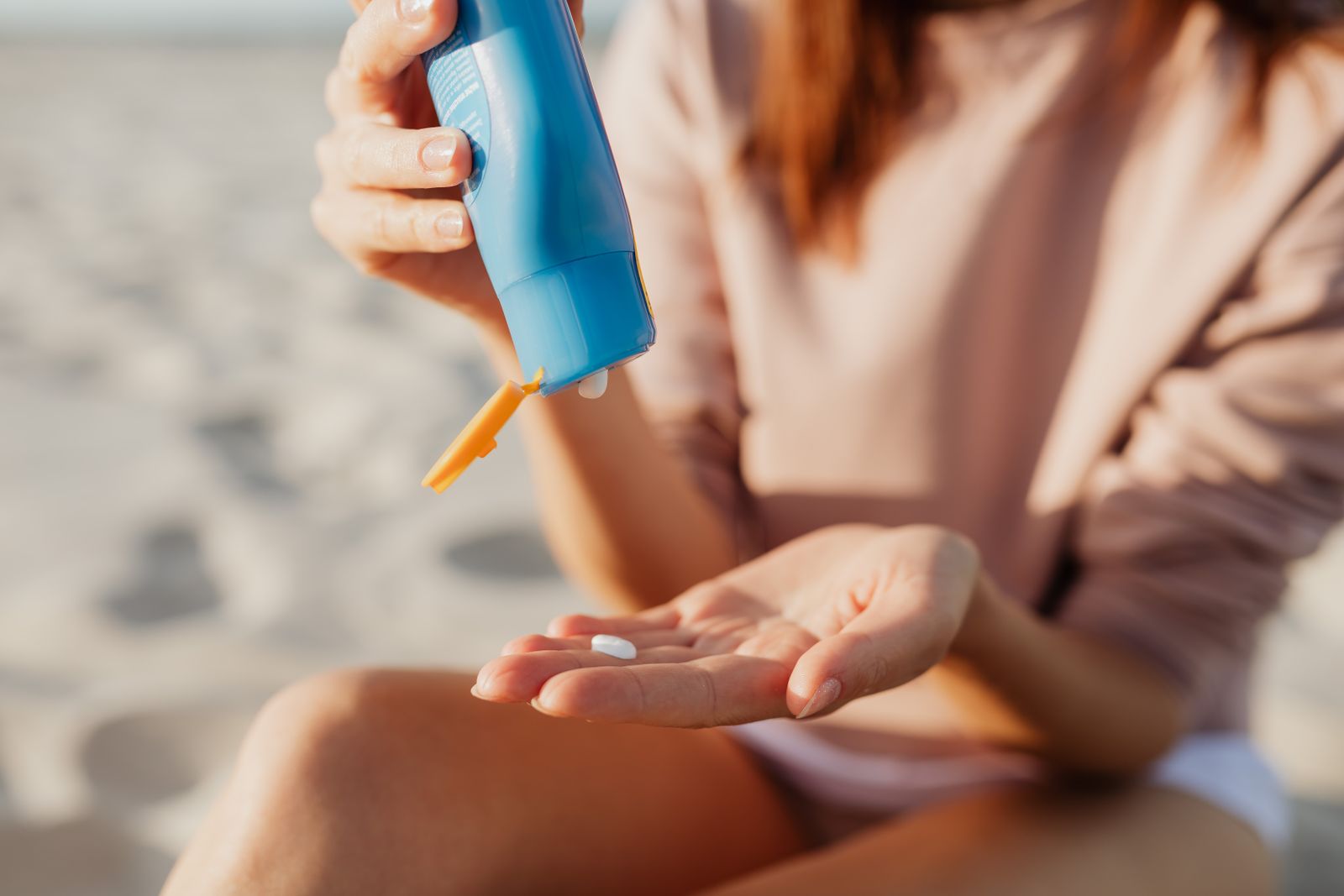
- An SPF number mainly measures protection against sunburn caused by UVB under test conditions; it does not set a safe time in the sun or the level of UVA protection.
- A UVA or 'broad spectrum' claim needs a separate test, water resistance is stated for a tested time, and no sunscreen is 'waterproof' or blocks radiation completely.
- Check every phrase on the pack, shop page and influencer script against the test result and directions for use, and confirm the requirements adopted in the market of sale.
This article is professional education on reading labels and claims and does not replace advice from a health professional when choosing a sunscreen for a skin condition, an allergy or a child.
What does an SPF number actually measure?
The sun protection factor (SPF) measures protection against sunburn, which is caused mainly by UVB rays. The higher the number, the greater the sunburn protection, but FDA points out that SPF is not a measure of how long a person can safely spend in the sun. [1]
So phrases such as “protects you for 10 hours” or “SPF 50 is enough for a whole day at the beach” draw a conclusion the number does not measure. The figure comes from test conditions that assume a set quantity of product, whereas real exposure varies with time, place, sweating, swimming and how much product is applied.
Why is SPF not enough to judge UVA protection?
UVA protection is measured by a test separate from SPF. In the US, a “broad spectrum” sunscreen is one that protects against both UVA and UVB. [1] Under the EU recommendation, UVA protection should be claimed only if the UVA protection factor is at least a third of the SPF and the critical wavelength is at least 370 nm, with a minimum SPF of 6. [2] The critical wavelength indicates how far the product’s absorption extends towards the longer ultraviolet wavelengths, that is, into the UVA range; the higher it is, the broader the protection.
One internationally recognised method is ISO 24443:2021, which determines the UVA protection factor and critical wavelength in vitro from a UV absorbance curve, uses the in vivo SPF result to scale that curve, and does not apply to powder products. [4] So always ask: which test proves the UVA phrase for this particular product?
How should you read the protection categories on the pack?
The EU recommendation suggests simplifying the message for consumers with four categories, and that the category should appear on the pack at least as prominently as the SPF number. [2]
The value of these categories is that they stop a numbers race. A consumer understands “high protection” faster than the difference between 30 and 50, and the reviewer can check that the labelled number falls within the measured range. These are EU categories and not necessarily the format adopted in every Gulf market, so check the requirements in the market of sale before using them on a label.
Which phrases must not appear on a sunscreen?
The EU recommendation says a sunscreen should carry no phrase implying complete protection from UV radiation, such as “sunblock” or “total protection”, or implying that it never needs reapplying. [2] FDA confirms that no sunscreen is “waterproof”, because all sunscreens eventually wash off. [1]
Conversely, the EU recommendation calls for warnings and directions for use to accompany the product, giving examples such as: [2]
- That the sunscreen does not give complete protection.
- To limit time in the sun and keep babies and young children out of direct sunlight.
- To apply before sun exposure and reapply frequently, especially after sweating, swimming or towelling.
- How much to apply, with a warning that using less clearly lowers protection.
Why does the quantity applied matter?
The SPF test assumes 2 mg of product per square centimetre of skin, which the EU recommendation equates to about 36 g for an average adult body. It notes that halving the quantity can reduce protection by as much as two-thirds. [2]
This matters to anyone writing shop content or training a sales team. A phrase such as “a light layer is enough” can undermine the very number on the pack. It is more accurate for content to explain the quantity needed and how to reapply, rather than focusing only on a light texture.
What does a “water resistant” claim mean?
In the US, a water-resistance claim must be backed by testing under set procedures, and the label must say whether protection lasts 40 or 80 minutes while swimming or sweating; reapplication is advised at least every two hours, and more often when sweating or swimming. [1] SFDA advises reapplying sunscreen every two hours or less, and after swimming or heavy sweating, even with water-resistant products. [3]
So if a shop page says “water resistant all day”, it implies something no test supports and should be changed to match the tested time and the directions.
Which SPF should you recommend to Gulf consumers?
Authorities word their advice differently, and content writers should pass it on accurately without blending it. FDA advises using a broad-spectrum sunscreen with an SPF of 15 or higher, regularly and as directed. [1] SFDA advises a sunscreen with an SPF of at least 30 to protect the skin and reduce tanning damage, and warns against getting it in the eyes. [3]
This difference is not a contradiction to settle on a product page; it is one more reason for content aimed at a Saudi audience to follow the Saudi authority’s message, and for content aimed at another Gulf market to point to its own competent authority. Do not turn general advice into a claim about a specific product: a phrase such as “the SPF recommended by the authority” on a pack can imply an official endorsement that was never given.
When a customer asks about sunscreen for a child, or for skin with a known condition or allergy, the professional answer is a referral to a health professional, not the highest number on the shelf.
Hypothetical example: two products with the same number
Hypothetical example: a Gulf online retailer lists two sunscreens, both labelled SPF 50. The first pack states UVA protection and shows a “high protection” category, while the second product’s page says nothing about UVA and describes it as “completely waterproof”.
The content reviewer requests the original pack and the technical file for the second product, and finds that the pack itself claims 40 minutes of water resistance and makes no UVA claim. The reviewer changes the page to match the pack: water resistant for a stated time, with reapplication directions, and removes any UVA comparison between the two products until a test result is available. The change and its reason are then recorded in the product file, so the old phrase does not return when the page is refreshed or copied to another sales platform.
How do you review the claim before publishing in a Gulf market?
| Phrase | Review question | Evidence or rule |
|---|---|---|
| SPF 50 | What method, what result? | SPF test report for the product |
| UVA protection | Does it meet the threshold? | Separate UVA test |
| Water resistant | How many minutes were tested? | Immersion test with stated time |
| Sunblock | Does it imply 100% protection? | Phrase to delete |
| Directions | Are quantity and frequency clear? | Quantity and reapplication stated |
Start from the approved pack text for the market of sale, then align the Arabic and English versions, the shop page and influencer scripts with it. In Saudi Arabia, SFDA announced updates to the Gulf technical regulations on cosmetic safety requirements and on claims, and moved the substance lists, including UV filters, to its website, so refer to the published list rather than an old saved copy. [5]
Also review the accompanying awareness messages: sunscreen is part of sun protection, not a substitute for it. FDA advises limiting sun exposure between 10 a.m. and 2 p.m. and wearing clothing that covers the skin, [1] and SFDA advises limiting exposure around midday and wearing hats and sunglasses. [3]
Conclusion
Read SPF as a measure of protection against UVB sunburn under test conditions, and ask for separate evidence for every UVA or water-resistance phrase. Remove any phrase implying total protection or no need to reapply, and make quantity and frequency clear in every channel.
Frequently asked questions
Does a higher SPF mean more UVA protection?
Not necessarily. SPF mainly measures protection against UVB sunburn, and UVA protection is measured by a separate test. The EU recommendation, for example, requires the UVA protection factor to be at least a third of the SPF. [1, 2]
Can you work out how long you can stay in the sun from the SPF?
No. FDA explains that SPF is not a measure of how long you can safely stay in the sun, because exposure changes with conditions and with how much product is applied and how. [1]
Does water resistant mean the sunscreen will not come off?
No. All sunscreens eventually wash off, and a US water-resistance claim states a tested time of 40 or 80 minutes. SFDA advises reapplying after swimming or sweating even with water-resistant products. [1, 3]
Why should the pack state how much to apply?
Because the test assumes a set quantity, and the EU recommendation says halving it can cut protection by as much as two-thirds, so it recommends showing the quantity and warning that using less reduces protection. [2]
Does sunscreen replace other sun protection?
No. FDA and SFDA both advise limiting sun exposure around midday and wearing hats and sunglasses alongside sunscreen. [1, 3]
References
- U.S. Food and Drug Administration (FDA). Sunscreen: How to Help Protect Your Skin from the Sun (2026)
- European Commission (copy hosted by the Croatian Ministry of Health). Commission Recommendation 2006/647/EC on the efficacy of sunscreen products and the claims made relating thereto (2006)
- Saudi Food and Drug Authority (SFDA). «الغذاء والدواء» تنصح باستخدام واقيات الشمس لتقليل أضرار «التان» (2024)
- International Organization for Standardization (ISO). ISO 24443:2021 Cosmetics — Determination of sunscreen UVA photoprotection in vitro (2021)
- Saudi Food and Drug Authority (SFDA). «الغذاء والدواء» تعتمد تحديثات جديدة للوائح الفنية الخليجية لتنظيم منتجات التجميل (2025)