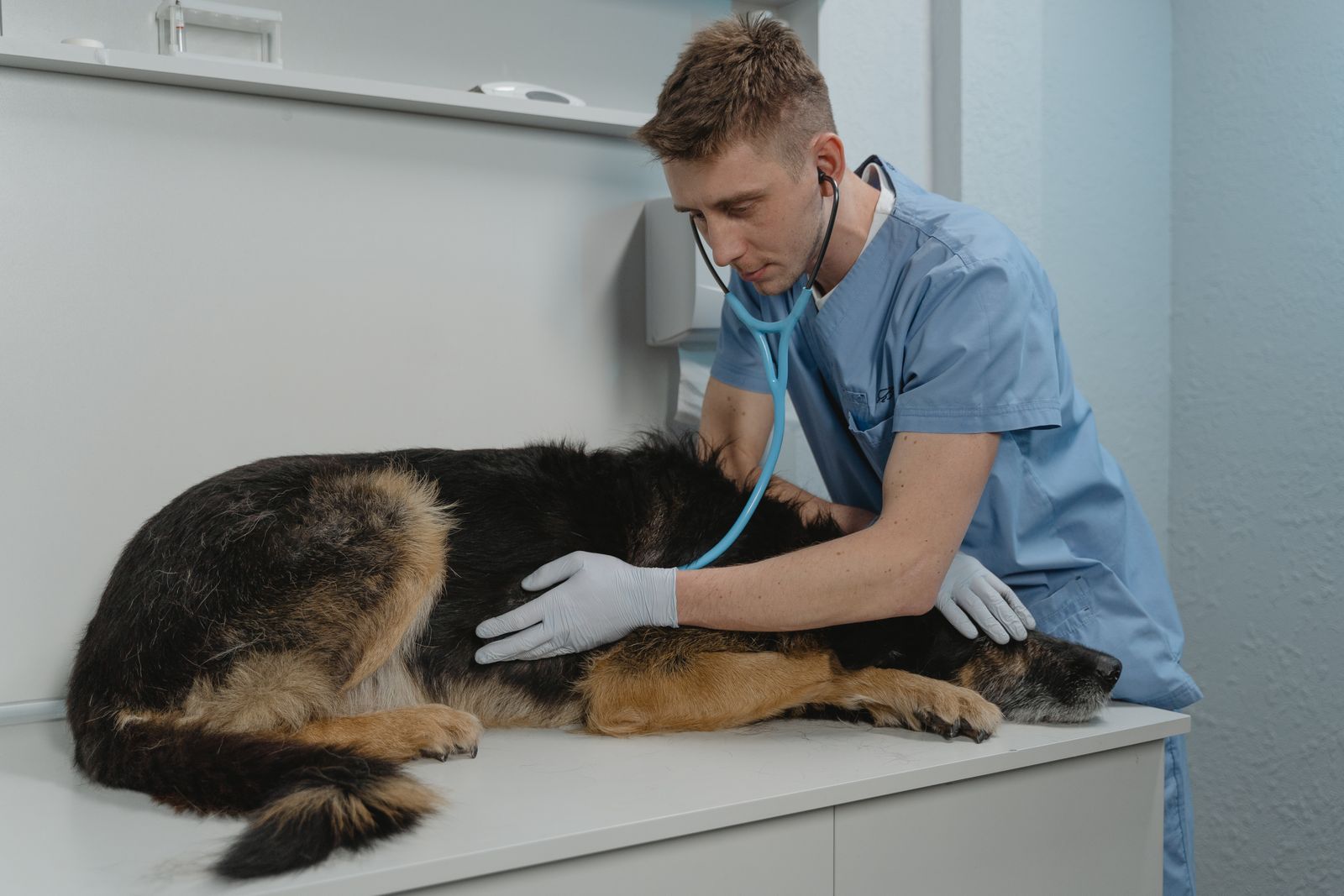
- Stewardship means supporting the right veterinary decision, documenting and reviewing its rationale, and reducing the need for treatment through prevention and good care.
- Success is not measured by lower use alone if it leads to neglecting an animal that needs treatment; indicators open a professional question rather than deliver an automatic verdict.
- The system combines diagnosis, records, linking prescription to dispensing and administration, follow-up and clear responsibilities.
This article is organisational and educational. It does not recommend a medicine, a dose or a treatment.
What does stewardship mean inside a facility?
The World Organisation for Animal Health (WOAH) links responsible use to protecting animal and human health and limiting the risk of resistance, within a One Health approach. Vets, owners, staff, distributors and the competent authorities all take part according to their roles. A circular asking for less dispensing does not achieve this; it needs a way of making and documenting decisions and reviewing what happens to the animal afterwards. [1]
It is best to start by defining the facility’s scope: a companion animal clinic, a farm, a stable, or a service for several herds. Records, indicators and regulatory considerations differ with the context. What works for measuring a herd’s consumption cannot be transferred unchanged to a clinic that sees varied cases. This difference should be reflected in the monitoring plan, so management does not compare dissimilar units with a single indicator.
What should the treatment decision record contain?
The vet documents the identity of the animal or group, the clinical history, examination and diagnosis or justified suspicion, the tests available and the reason for choosing the treatment route. The prescribed product and the instructions for its use set by the vet are recorded, along with the review date, any precautions, and the withdrawal period where it applies. The decision should not be left as a verbal message that is hard to trace when the shift changes or the animal moves. [1]
The facility can add administrative fields to help traceability, such as who received the instructions, the source of the medicine and its batch number where needed, the record of actual administration, and the reason for any deviation from the plan. These are suggested fields to be adapted to the local system. Their value lies in revealing gaps between what was prescribed and what was done, not in adding paperwork that is never used for care and follow-up.

How do you link the prescription to dispensing and administration?
The facility needs to be clear about who prescribes, who dispenses, who administers and who checks stock, according to legal authority. In a small facility, these roles may sit with very few people, but responsibilities and records must remain clear. Treatment instructions for one animal must not become an open licence to use the medicine in other cases that look similar to the worker.
Reconcile records and stock periodically to explain differences, such as spoilage, returns or unrecorded dispensing. This reconciliation does not judge the quality of the clinical decision on its own, but it reveals points that need review. If an unexplained quantity is found, start by tracing the documents and the process before blaming an individual. Products must be stored and disposed of according to their instructions and local requirements, with no leftovers available for haphazard use.
When should the plan be reviewed with the vet?
The timing of review depends on the case and the vet’s instructions, and covers the response and any clinical change or laboratory results that arrived later. If the condition does not improve or recurs, the diagnosis, the circumstances and suitable tests are reassessed, rather than automatically switching to another medicine or calling it “stronger”. Staff do not change the dose, duration or route of administration on their own. [1]
Administratively, record that the review took place and what the vet decided, linked to the earlier record. A “follow-up done” tick without an understandable outcome is not enough. The system should also make clear which cases need the vet to be called outside the scheduled time, so the team does not wait for the next routine visit when changes call for a quicker assessment.
How do you reduce the need for antimicrobials in the first place?
Prevention depends on good care, hygiene, biosecurity, nutrition, appropriate vaccination and early diagnosis, under a veterinary plan. WOAH makes clear that antimicrobials should not make up for inadequate husbandry. So usage records are discussed alongside housing, animal movements and infection, not only inside the pharmacy. Recurring cases of a particular kind may reveal a need to adjust management or prevention. [1, 3]
Consider a review meeting with the vet, the operations manager and the staff involved, focused on one specific problem. Ask: Where do cases recur? Do they follow the arrival of new animals? Is there a gap in isolation or cleaning? Then the team agrees an action that can be reviewed. These are organisational questions, not a diagnosis of a pathogen or a recommendation for a particular vaccination strategy; the veterinary decision rests on the evidence and the local context.

Which indicators help without misleading management?
You can track record completeness, the share of cases reviewed as planned, recurring reasons for use, and gaps between prescription and administration. Measuring the quantity of antimicrobials requires clearly defined units and classes, related to animal numbers, weights or facility activity using a suitable method. International monitoring standards stress the quality and interpretability of usage data. [2]
Do not rank vets by who dispenses least without knowing the type and severity of their cases; that may push them towards an unsuitable decision. Do not compare a month with an outbreak to a quiet month and attribute the difference to management success. Explain changes, context and missing data, and use the indicator to open a professional question, not to deliver an automatic verdict on the quality of care or the vet’s competence.
What does a hypothetical case look like?
In a hypothetical facility, differences appear between dispensed quantities and treatment records. The team reviews the process and finds that some entries are left until the end of the shift and details get lost. It fixes this by making recording easier, linking dispensing to the case identifier and clarifying responsibility. The case does not assume clinically unjustified use; it shows that weak documentation can prevent a fair assessment of the decision in the first place.
Once recording is fixed, the vet discusses the patterns of recurring cases and decides whether a preventive check or a change in care is needed. Management tracks whether the work is completed, while clinical judgement stays with the specialist. The review report states what has been confirmed and what needs more data, without claiming that lower dispensing alone proves lower antimicrobial resistance; measuring resistance has different requirements.
What is different in the Gulf states?
Check the country’s rules on licensing veterinary practice, dispensing veterinary medicines, registered products and food safety. In food-producing animals, the withdrawal period set by the responsible vet according to the product, use and law must be respected, and a period must never be borrowed from another medicine. Requirements for animal transport, disease reporting and waste handling also differ, so a general code is not a substitute for the local authorities.
The detailed reference used here is WOAH Chapter 6.10 in its 2024 edition, together with WOAH’s current portal for updates; this edition should not be described as the latest without further checking when the facility adopts its policy. The policy is reviewed periodically by the responsible vet, especially when regulations, products or relevant evidence change.
How do you start a small internal review?
Choose records that represent normal work, and decide what you are looking for: a documented rationale, clear instructions, dispensing linked to administration, and case follow-up. Do not start by ranking vets or comparing raw quantities. Ask the vet to explain unclear cases; there may be clinical information that never reached the record the administrative reviewer sees.
Group the findings into fixable themes, such as a missing field, difficult data entry or unclear responsibility, then choose a limited intervention and test it. If the form is long and does not suit field work, simplify it while keeping the necessary information. If the fault is in understanding the instructions, tie the training to the task where the problem appeared.
After the change, review another sample in the same way, explaining the limits of the comparison. More complete records show better documentation; they do not directly prove that all clinical outcomes have improved. This distinction keeps the report accurate and avoids overstating the initiative’s success. The review can later be widened under veterinary supervision once suitable data and methods are available. Make sure staff know why data is collected and how it is used to improve care; a clear purpose encourages accurate recording, while using every small gap to assign blame may encourage hiding problems instead of fixing them.
Frequently asked questions
Does stewardship mean banning antimicrobials?
No. It means using them when the vet decides they are needed and in the right way, together with prevention and follow-up. Protecting an animal from unnecessary treatment does not mean denying it treatment it needs.
Can I use leftover medicine for another animal?
Do not make this decision yourself. Similar-looking symptoms do not prove the same diagnosis, and the animal needs a proper veterinary assessment and instructions.
Is a lower quantity enough evidence of success?
Not on its own. It is interpreted alongside cases, outcomes, record quality and care, and is not used to encourage delayed treatment or hidden dispensing.
Who sets the withdrawal period?
The responsible vet, according to the product, the species, the use and local requirements. This article gives no standard periods, because they may be unsuitable or unlawful for a given case.
What is the first practical step?
Review a sample of records to check that each case can be linked to its prescription, dispensing, administration and follow-up, then fix the most important gap before expanding the indicator dashboard.