- Heat risk is managed before horses go out to train or travel, by checking the weather, humidity, the individual horse and the availability of water, shade, ventilation and cooling.
- No single time or number guarantees safety for every horse; decisions depend on actual conditions on site and a plan set by the vet and the trainer.
- If heat stress is suspected, stop the activity, start safe cooling and call the vet quickly, following a response plan rehearsed in advance.
This is educational content, not a diagnosis or a treatment plan for any individual horse.
Why is a temperature reading not enough?
A horse’s ability to shed body heat depends on environmental conditions, including humidity, air movement and sun exposure, as well as the intensity of effort and the horse’s condition. So a cooler but very humid day can also be hard on horses. FEI guidance stresses planning for hot and humid conditions rather than relying on the impression that the weather is bearable. [1, 2]
Do not take an index designed for people and treat it as a definitive veterinary limit for horses. The veterinary team chooses a suitable assessment method for the event, the venue and the animals, and links it to what is actually observed. It also matters where the weather reading is taken; the shade by the office may not represent the training arena or the inside of a parked trailer. This operational point improves the data the decision relies on.
What should be checked before a training session?
Review the type of work, its duration and location, the horse’s usual condition and any recent illness, travel or break, and the plan for returning to full workload. Do not compare horses on breed or size alone, and do not assume that being used to the region removes the risk. The vet and the trainer set a plan suited to fitness, acclimatisation and actual conditions, ready to change it if the horse’s condition changes. [2, 3]
Decide in advance who has the authority to reduce or stop the work, where water and cooling are, and how the vet is called. If these are not in place, the problem is organisational before it is a performance problem. A short preparation checklist can cover the means of communication, the route for help to arrive and the recovery area, without becoming a substitute for veterinary assessment or the rules of the event the horse is taking part in.
How do you choose the time and place for training?
Look for the period and environment with the lowest heat load according to local monitoring, rather than a fixed hour all season. Humidity and air movement may differ between morning and evening, and an open arena differs from a covered one. Consider reducing the workload, moving the activity or postponing it when conditions become unsuitable, keeping training goals without sacrificing welfare.
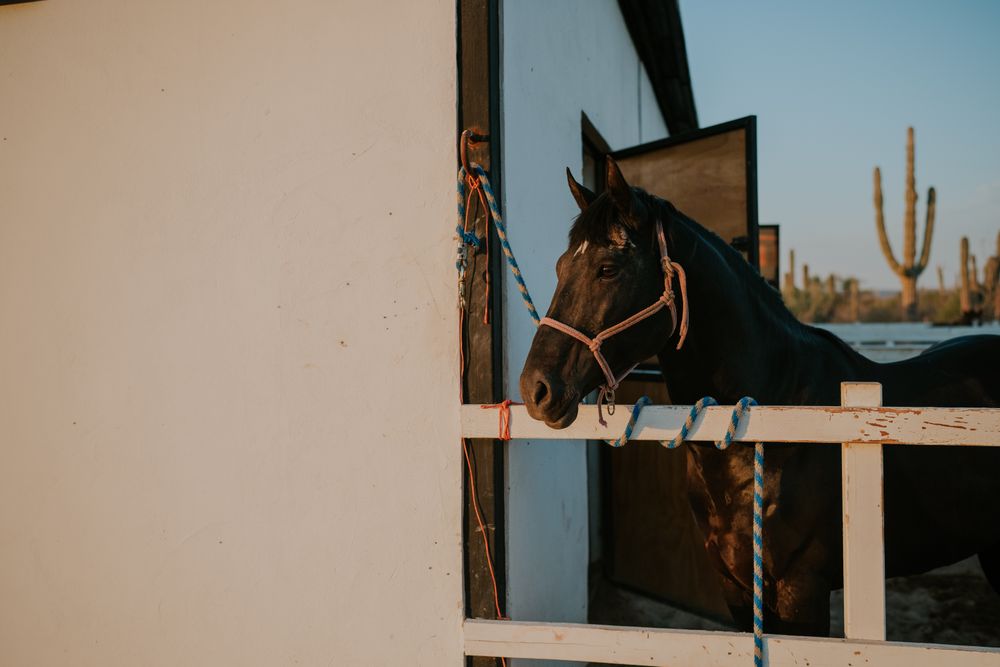
Stable design needs suitable ventilation, shade and water supply, and the FEI’s “Beat the Heat” campaign highlights the importance of cooling stations, water, ice, shade and ventilation at events. These recommendations do not mean that one fan solves every problem; the airflow has to reach where the horses stand, and equipment must be run safely so that it does not injure the animals or the staff. [1]
What should be monitored during and after work?
A qualified staff member watches for changes in behaviour, breathing effort, sweating and recovery compared with the horse’s normal state, and reports any worrying change. Do not wait for every sign to appear, and do not take the fact that a horse keeps moving as enough evidence that it is fine. Signs can overlap with other problems, so clinical judgement belongs to the vet. [2, 3]
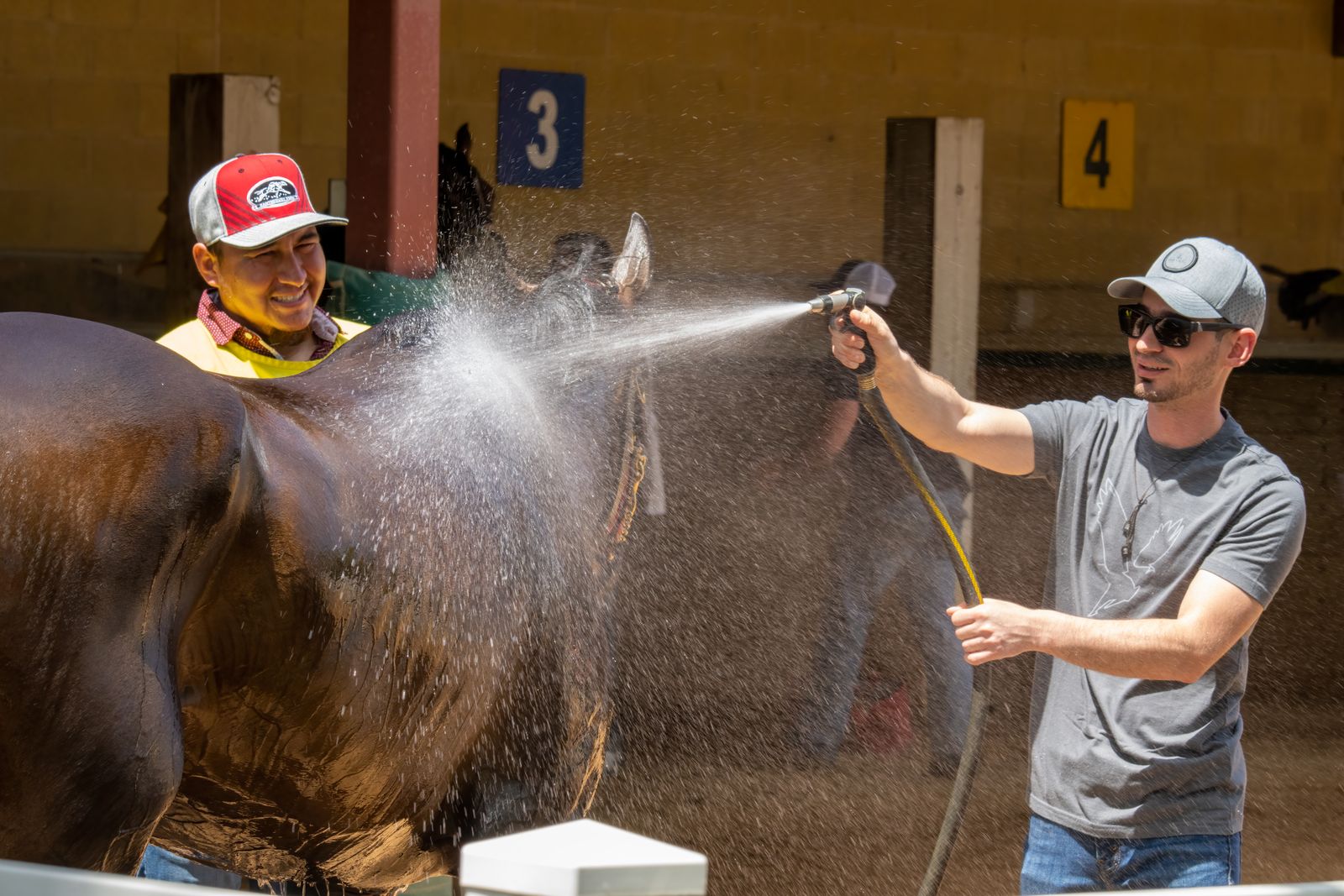
If the team suspects heat stress, it stops the effort, moves the horse safely to a suitable place and starts cooling with water as veterinary guidance directs, while calling for help. Do not delay calling the vet while you try one remedy after another, and do not give medicines or therapeutic fluids on your own initiative. A plan written in advance speeds up the response and makes clear who stays with the horse, who prepares the area and who contacts the vet.
How does the plan change for transport?
Check the weather along the route and at the destination, the ventilation of the vehicle, the length of the journey and its stops, and access to water and help. A place that seems acceptable while moving may be very different when stationary. Horses should not be left in a closed or poorly ventilated vehicle waiting for paperwork that could have been prepared in advance. Specialists decide the travel arrangements that suit the situation. [2]
Contact the receiving site before setting off: Is the stabling ready? Is there shade and water? Who will receive the horses if arrival is delayed? These simple questions prevent unplanned waiting. Record the horse’s condition before travel, on arrival and any observations on the way, so the next team receives useful information rather than a general “the trip went well” that says nothing about what actually happened.
What does a hypothetical application in a Gulf stable look like?
A hypothetical stable plans a training session and the transport of some horses to an event on the same day. Instead of sticking to the original schedule, the trainer and the vet review the expected conditions and the strain of the journey, and the team decides to adjust the workload and the arrival arrangements to allow proper care. The case contains no time formula or fixed safe distance; its purpose is to show that training and transport are assessed together, not as separate events.
One staff member is assigned to check the water and cooling equipment, and another to confirm the receiving site is ready. After the journey, the notes and any change in recovery are reviewed. If a problem appears, the team discusses what could have been anticipated and what needs adjusting next time. No success rate is drawn from this case, and no undocumented field experience is attributed to Nevada.
What is different about applying this in the Gulf?
Humid coastal environments differ from inland areas, and conditions change through the season and the day. The facility should use data from its own site, its vet’s experience and the regulator’s rules, not a generalisation across all GCC countries. The plan also covers protecting the staff who provide care and cooling; their own heat strain can affect their ability to notice and respond to changes in the horses. [1]
Keep an operational log covering the weather, where it was measured, the activity, the horse, observations, the action taken and the person responsible. This is a suggested communication template, not a substitute for the medical record. It helps review recurring patterns, such as difficulties after a particular journey or in a particular arena, with the vet interpreting these observations before the care or training plan is changed.
How do you train the stable team to respond?
Run an organisational drill without deliberately putting any horse under strain. The team reviews where equipment is, how to contact the vet, who directs people’s movements and how to keep everyone safe. The drill does not need simulated symptoms or medicines; testing the clarity of roles, resources and the communication route is enough. The medical content of the drill is set by the vet in charge.
Record the obstacles: a hose that does not reach the spot, an out-of-date phone number, or no one present with authority to stop the activity. Give each obstacle an owner and a date, then retest the part that failed. A written plan does not prove that the equipment works or that a new worker knows where things are, so practical checking is part of readiness.
With a multilingual workforce, give the basic instructions in a form everyone understands, and ask each person to explain or demonstrate their role. Do not rely on an attendance signature alone, and do not make one worker the only source of knowledge. The aim is a response that continues across shifts and holidays. These are management arrangements that support the veterinary plan; they do not give staff authority to diagnose or treat. Review the plan when horses move to a new site, transport changes or an event is organised, because access to water, shade and help may differ. After every real incident, the team discusses what happened with the vet and updates the arrangements based on the lessons learned, without turning them into a general formula for every horse.
Frequently asked questions
Is training at night always safe?
No. Heat and humidity can remain high, or ventilation may be poor. The decision depends on actual conditions, the horse's condition and the type of effort, not just on the sun having set.
Are horses used to the heat unaffected?
Acclimatisation matters, but it does not remove the risk. Monitoring, preparation and adjusting the workload are still necessary, especially after illness, travel or a change in work intensity. [2]
Should I withhold water from a horse after exercise?
Do not deprive horses of water because of common beliefs. Follow the drinking and care plan set by the vet, and consult them if there is illness or abnormal signs.
When should I call the vet?
When heat stress is suspected, when worrying changes appear, or when recovery is unusual. Do not rely on this article to judge how serious a case is or to delay veterinary help.
Does a horse management programme qualify me to diagnose and treat?
A professional programme supports knowledge of management and care within its scope; it does not replace the veterinary licence and qualification needed to diagnose and prescribe treatment.