- A CV proves subject expertise, but not the ability to turn it into learning activity that achieves the programme's objectives.
- A teaching demonstration under the same conditions for every candidate is a genuine work sample that makes the comparison fairer and clearer.
- Assess against observable criteria, record scores independently before discussion, and confirm before contracting who will actually deliver the sessions.
Why is a CV not enough?
A CV answers one question: does the candidate know the subject? It does not answer the question that matters most in a training programme: can they make trainees able to do it? An audit expert with years in the field may explain accurately and still be unable to design an exercise that shows whether trainees have understood.
CDC’s quality training standards reflect this distinction. They place the choice of delivery methods and trainers within the needs assessment stage, ask for content to be reviewed by subject-matter experts for accuracy and bias, and expect training to include interactive elements such as knowledge checks, case studies and exercises, with opportunities for feedback and inclusive participation. [1] In other words, subject expertise is a necessary condition, but teaching performance is a separate condition that needs assessing in its own right.
Define the training task before meeting candidates
You cannot assess a trainer without knowing what is required. Before advertising or issuing a request for proposals, write down:
- The programme’s objectives using measurable verbs, as CDC guidance recommends by combining Bloom’s Taxonomy with SMART criteria. [3]
- The target audience: grade, prior experience and numbers.
- The delivery mode: classroom, live online or blended.
- The language of delivery and materials: Arabic, English or both.
- The selection criteria and their weights: decide in advance how much experience, the demonstration, the materials and price count in the final decision, so priorities are not reshuffled after meeting the candidates.
If your organisation contracts an external provider, ISO 29993:2017 sets requirements for learning services outside formal education, including in-company training whether outsourced or in-house, and covers services delivered both to learners and to sponsors who buy them on learners’ behalf. ISO states that the standard was reviewed and confirmed in 2023. [4] It can serve as a framework when drafting the requirements in a request for proposals.
- 1Define the taskObjectives, audience, mode and language
- 2Screen CVsRelevance to topic and audience
- 3Review sample materialsDesign linked to objectives
- 4Standard teaching demoSame topic, time and audience
- 5Independent scoringAgreed scale before discussion
- 6Pre-contract checksActual presenter, references, rights
The teaching demonstration: how do you standardise it?
A teaching demonstration is a form of the “work samples” described by the U.S. Office of Personnel Management (OPM): tasks that mirror what the candidate will actually do in the job. OPM notes that they have high content validity because they closely represent the work, and that applicants tend to see them as fair, but that they can be costly to develop and run, and are scored by trained assessors who observe the applicant’s behaviour or by measuring task outcomes. [2]
To make the comparison fair, standardise the conditions:
- The same topic: one concept from the programme being commissioned, not a topic the candidate chooses and knows well.
- The same time: a short, fixed slot long enough to explain the concept and run a brief task.
- The same audience: panel members or staff representing the target audience play the trainees.
- The same written instructions: ask the candidate to explain the concept, then set a short task that measures it, then deal with a common mistake trainees make.
What should you assess in the demonstration?
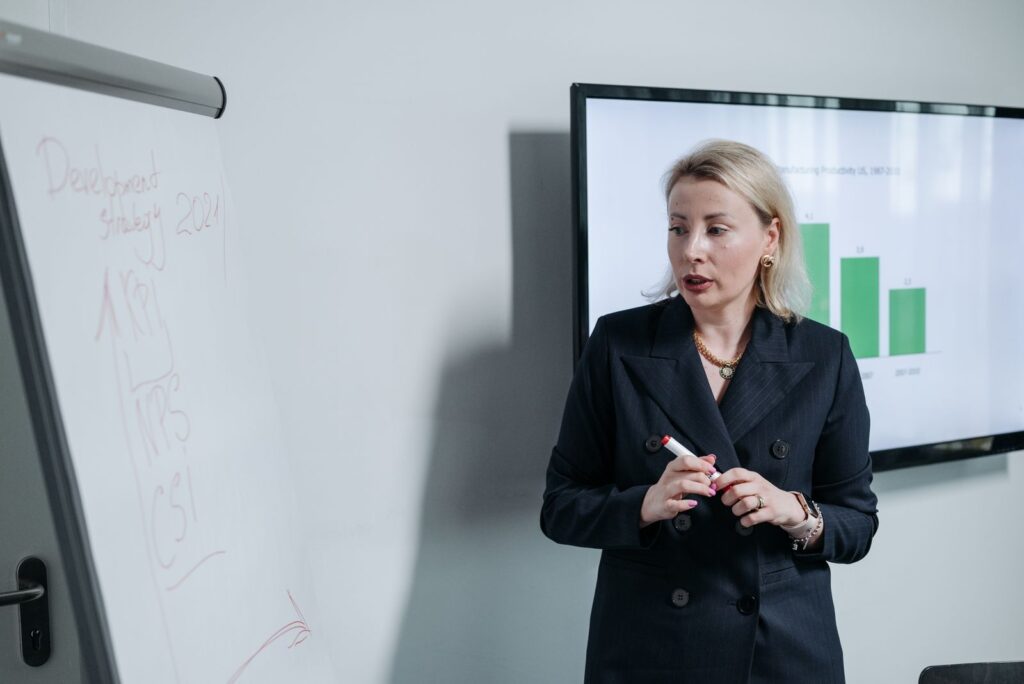
Separate practical expertise from the ability to turn it into learning activity. The question is not only “does the candidate know the subject?”, but also “how did they know the trainees had understood?” and “what did they do when someone got it wrong?”
| Criterion | Observable evidence |
|---|---|
| Content accuracy | Correct explanation, clear limits of the rule |
| Relevance of examples | Example from the audience's workplace |
| Practice | Short exercise tied to a programme objective |
| Checking understanding | Question or task that reveals understanding |
| Correcting errors | Handles a common error without embarrassment |
| Time management | Completes the activity in the time set |
For each criterion, decide before the session what counts as weak, acceptable and strong performance. “Checking understanding”, for instance, is weak if the candidate simply asks “Is that clear?”, acceptable if they ask a specific question, and strong if they set a short task that exposes the mistake before moving on.
A sample of training materials
Ask shortlisted candidates for one session plan from the programme: its objectives, activities and timings, and how learning will be checked at the end. Check it for alignment between objective, activity and assessment; CDC guidance makes objectives the basis for choosing content and activities and for building meaningful assessment. [3] Ask an internal subject-matter expert to review the content for accuracy, as CDC’s standards recommend expert review of content [1], and for fit with the organisation’s own rules and procedures, which an external candidate may not know in detail.
If the programme is delivered live online
The 2021 ibstpi instructor standards distinguish core competencies that apply in every modality from competencies specific to blended learning and to online learning. [5] So run the demonstration on the same platform the programme will use, and watch how the candidate manages interaction at a distance: do they use the platform’s tools to involve everyone? Do they notice the silent trainee? How do they cope with a dropped connection or delayed responses?
How do you avoid selection panel bias?
- A scale agreed before the demonstrations: criteria are not drafted after seeing the candidates.
- Independent scoring: each member records their scores alone before any discussion, so members are not swayed by the most senior person in the room.
- The same panel for every candidate where possible, with demonstrations scheduled so assessors are not worn out by the end of the day.
- Trained assessors: a teaching demonstration is scored by observing behaviour, and OPM notes that such observation is done by trained assessors. [2] Hold a short session to walk members through the scale before the first demonstration.

Hypothetical example: three candidates for a regulatory report-writing programme
Hypothetical example: a Gulf organisation is choosing a trainer for a programme on writing regulatory reports. It gave each candidate the same case and the same time, asking them to explain the rule for drafting an audit finding and then set a short task. Three panel members scored each criterion independently from 1 to 4, then averaged their scores, rounded:
| Criterion | Candidate A | Candidate B | Candidate C |
|---|---|---|---|
| Content accuracy | 4 | 3 | 4 |
| Practice tied to the objective | 2 | 4 | 3 |
| Checking understanding | 2 | 4 | 3 |
| Correcting errors | 2 | 3 | 3 |
Candidate A had the longest regulatory experience and the most precise explanation, but spent most of the time explaining and never checked the trainees’ understanding. Candidate B explained the rule briefly, asked for a finding to be drafted, and showed how the evidence and wording would be assessed. The panel discussed the scores after recording them and chose B, bringing in A as an expert to review the accuracy of the programme content.
What should you verify before contracting?
- Evidence of experience: specific examples of similar programmes in topic and audience, and referees who can be contacted.
- Who will actually deliver the sessions: if a provider bids with a named trainer, write that name into the contract and set the conditions for substitution and your prior approval of any replacement.
- Language and accessibility: the trainer’s ability to deliver in the programme’s language and willingness to prepare accessible materials where needed, which is part of CDC’s usability and accessibility standard. [1]
- Rights in the materials: agree in writing who owns the materials and the right to use and adapt them after the programme.
- Post-programme support: does the trainer provide follow-up resources for trainees, such as tip sheets or a follow-up session? CDC counts follow-up support after training among its eight quality standards. [1]
- Professional credentials: link any certificate the candidate cites to the body that awards it and to the purpose your project needs, and verify it with the awarding body.
Conclusion
Define the training task and its objectives first, and use the CV for screening, not for the decision. Then ask for a standardised teaching demonstration, score it with an agreed scale and independent marks, and confirm before contracting who will deliver the sessions and who holds the rights to the materials.
Frequently asked questions
Should I always choose the most experienced candidate?
No. Check how relevant their experience is to the programme's topic and audience, and compare it with their performance in the teaching demonstration; an expert practitioner is not always the best person to train others in it.
Should every candidate get the same demonstration topic?
Usually, yes. Similar conditions of topic, time and audience mean that differences in scores come from the candidate's performance, not from differences in the task.
Is reviewing the training materials a candidate sends enough?
No. Materials show the design, but the demonstration shows how the trainer runs an activity, checks understanding and corrects mistakes, so combine the two.
When should I ask for professional references from previous clients?
When you need to verify similar experience in topic, audience or scale, and ask the referee for specific examples rather than a general impression.
Does assessment differ if the programme is delivered live online?
Yes. The 2021 ibstpi instructor standards distinguish core competencies across all modalities from those specific to blended and online learning, so run the demonstration on the platform the programme will use. [5]
References
- U.S. Centers for Disease Control and Prevention (CDC). CDC Quality Training Standards (2026)
- U.S. Office of Personnel Management (OPM). Work Samples and Simulations
- U.S. Centers for Disease Control and Prevention (CDC). Design Training: Learning Objectives (2026)
- International Organization for Standardization (ISO). ISO 29993:2017 Learning services outside formal education — Service requirements (2017)
- International Board of Standards for Training, Performance and Instruction (ibstpi). Instructor Competencies (2021)
Recommended programmes