
- Hardship under Article 97 makes performance onerous, not impossible: it lets the debtor invite the other party to negotiate, but does not allow it to stop performing.
- Impossibility for a reason beyond the debtor's control under Article 110 extinguishes the obligation and the corresponding obligation in bilateral contracts, and only the impossible part if it is partial.
- Classify each obligation separately, using a documented record of the event, its effect and the alternatives, and check the contract's force majeure clause and, where the counterparty is a government entity, the Government Tenders and Procurement Law.
This article is general legal information; it does not determine how a particular dispute should be classified or whether suspending performance is lawful, which should be referred to a lawyer licensed in Saudi Arabia.
Why does the distinction matter before you act?
When an event disrupts performance, such as a closed shipping route or a sudden regulatory decision, many contract managers rush to call it “force majeure”. But Saudi Arabia’s Civil Transactions Law, issued by Royal Decree No. M/191 dated 29/11/1444H, [2] distinguishes two situations, each with its own conditions and consequences:
- Hardship (Article 97): performance is still possible but has become onerous.
- Impossibility for a reason beyond the debtor’s control (Article 110): performance is no longer possible. [1]
Getting the classification wrong is costly. A party that stops performing in the belief that the event is force majeure, when it is in fact hardship, may find itself in breach.
The confusion is greater because many contracts, especially those adapted from international templates, use “force majeure” more broadly than impossibility under the law: the clause sometimes covers events that delay or temporarily suspend performance without making it impossible. So read the contract clause and the statutory text together, and do not assume the term means the same thing in both.
Hardship: when does Article 97 apply?
Article 97 requires extraordinary general circumstances that could not have been foreseen at the time of contracting, which make performance of the contractual obligation so onerous that it threatens the debtor with grave loss. [1] Describing the circumstances as “general” is commonly read to mean that the event must not be specific to the debtor alone, such as its own poor management or financial difficulties.
If the conditions are met, the consequences follow in steps:
- The debtor may, without unjustified delay, invite the other party to negotiate.
- The request to negotiate does not entitle it to stop performing; it remains bound by its obligations.
- If the parties do not agree within a reasonable period, the court may reduce the onerous obligation to a reasonable level after balancing both parties’ interests.
- Any agreement to the contrary is void. [1]
The practical result: hardship does not suspend the contract; it opens the way to restoring balance, and delay in asking to negotiate weakens the debtor’s position.
Force majeure and impossibility: what does Article 110 say?
In bilateral contracts, if performance of an obligation becomes impossible for a reason beyond the debtor’s control, its obligation and the corresponding obligation are extinguished and the contract terminates automatically. [1] If the impossibility is partial, only the part corresponding to the impossible portion ends; the creditor may ask for termination, and the court may refuse if the unperformed part is insignificant. [1]
Other provisions of the law are relevant:
- Article 170: no compensation is awarded against the debtor if it proves that non-performance arose from a reason beyond its control. [1]
- Article 171: a debtor that is late in performing is liable for the resulting harm, unless the delay was due to a reason beyond its control. [1]
- Article 174: the parties may agree that the debtor bears the consequences of force majeure. [1]
| Test | Hardship (Art. 97) | Impossibility (Art. 110) |
|---|---|---|
| Nature of event | Extraordinary, general, unforeseeable | Reason beyond debtor's control |
| Effect on performance | Onerous, threatens grave loss | Wholly or partly impossible |
| First step | Invite negotiation without delay | Evidence impossibility, notify |
| Fate of obligation | Continues and is performed | Ends with the counter-obligation |
| Court's role | Reduce to a reasonable level | May refuse termination if part is minor |
What does your contract say before the law?
The law sets the framework, but the contract settles many of the details. Open the contract and look for:
- Definition of force majeure: does it list specific examples, and does it expressly exclude events such as subcontractor failure or price volatility?
- Allocation of risk: have the parties agreed that the debtor bears the consequences of force majeure, as Article 174 permits? [1]
- Notice: the period, form and recipient, and what happens if notice is late.
- Mitigation and suspension: the duty to limit the effect, any right to temporary suspension, and a right to terminate if the event continues.
Note the difference: the contract can regulate force majeure and who bears it, but it cannot exclude the hardship rule, because Article 97 makes contrary agreements void. [1]
The event log: what to record for each obligation
A single event rarely affects every obligation to the same degree. A closed shipping route may make one item impossible to deliver on time, leave another deliverable by a longer and more expensive route, and not touch on-site service obligations at all. So analyse each obligation separately.
- 1ObligationClause, date and quantity
- 2EventWhat happened and when
- 3EffectImpossible, onerous or slower
- 4AlternativesOther routes and their cost
- 5ActionNotice, negotiation or mitigation
In each file, keep dated correspondence and notices, quotations for alternatives and their cost, meeting minutes, and the decision taken and by whom. These records are what will be put before the forum if the disagreement escalates.

If you are the party receiving the notice
Contract managers are often on the creditor side: the organisation that has received a force majeure notice or a request to negotiate from a supplier or contractor. Neither accept nor reject the label until you have asked for what you need to judge it:
- The obligation: which clause or delivery is affected, and what can still be performed.
- Evidence of the event: an independent source showing that it happened and when it started, not just a general reference to it.
- Causation: how the event made performance impossible or onerous, and why the available alternatives are not enough.
- Mitigation plan: what the debtor has done to limit the effect, and when it expects to resume performance.
Remember that a request to negotiate under Article 97 does not release the debtor from continuing to perform, [1] so if performance stops without impossibility, document it. Before claiming compensation, check the notice requirement: compensation is due only after the debtor has been notified, unless the agreement or the law provides otherwise. [1]
Contracts with government entities: which law applies?
If the counterparty is a government entity, also check the Government Tenders and Procurement Law. The law issued by Royal Decree No. M/128 allows the contract to be extended and delay fines waived in cases including delay attributable to the government entity or to exigent circumstances, or to reasons beyond the contractor’s control. [3] Contract prices may be changed only in specified cases, including unforeseen financial difficulties arising during performance. [3]
Note that a new Government Tenders and Procurement Law was issued by Royal Decree No. M/76 dated 27/2/1448H and published on 4 September 2026, [5] and, according to a published legal analysis, takes effect on 2 January 2027. [4] The decree provides that the previous law continues to govern tenders issued while it was in force. [5] So first establish which of the two laws governs your contract.
Hypothetical example: a disrupted shipping route for a Riyadh project
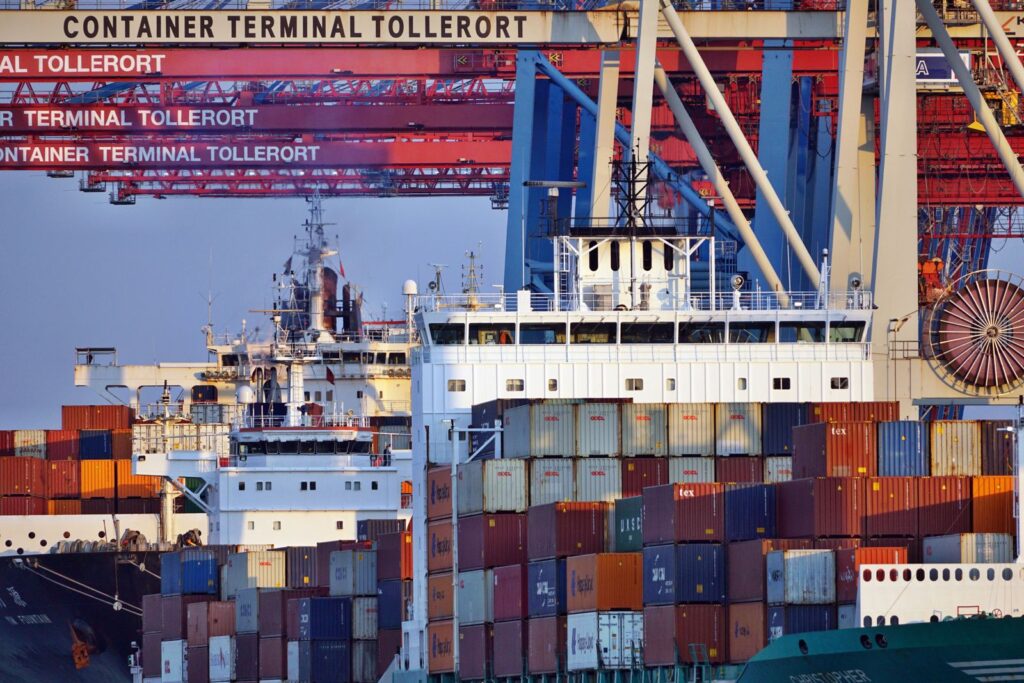
Hypothetical example: An equipment supplier to a private project in Riyadh finds that the sea route it relies on has been disrupted by regional events. The contract has three obligations: supplying pumps, supplying control panels, and installation and commissioning.
The contract manager analysed each obligation separately. The pumps are available by a longer, more expensive route, so there is no impossibility; the question is whether the hardship reaches the level of threatening grave loss under Article 97. The control panels are custom-built and held in a closed port, so their delay may be examined as due to a reason beyond the supplier’s control. Installation is affected only by the late deliveries. The team sent notices in line with the contract, continued whatever performance was possible, documented the alternatives and their cost, and put the classification to its adviser before any request for variation or extension.
Conclusion
Before calling an event force majeure, ask whether performance has become impossible or merely onerous. The answer varies from one obligation to another, and decides whether you ask to negotiate while continuing to perform, or evidence the impossibility and give notice. A documented record for each obligation is the basis of whatever position you take.
Frequently asked questions
Is a rise in prices or shipping costs force majeure?
Higher costs make performance heavier but rarely make it impossible, so they are not enough on their own for Article 110. They may engage Article 97 if they result from extraordinary general events that were unforeseeable and cause hardship threatening the debtor with grave loss. [1]
Can a supplier stop performing as soon as it asks to negotiate?
No. Article 97 provides that a request to negotiate does not entitle the debtor to stop performing, and it remains bound by its contractual obligations. [1]
Can the contract exclude the hardship rule?
No. Article 97 makes any agreement to the contrary void. For force majeure, by contrast, Article 174 allows the parties to agree that the debtor bears its consequences. [1]
What if only part of the obligation becomes impossible?
The obligation and the corresponding obligation end only for the impossible part; the creditor may ask for termination, and the court may refuse if the unperformed part is insignificant. [1]
Is the position different in contracts with government entities?
These contracts are also governed by the Government Tenders and Procurement Law, which allows the contract to be extended and fines waived where delay is due to reasons beyond the contractor's control or exigent circumstances, so check which procurement law applies to the tender. [3, 5]
References
- Ministry of Investment of Saudi Arabia (MISA). Civil Transactions Law, Royal Decree No. M/191 (English translation, Bureau of Experts at the Council of Ministers) (2023)
- Umm Al-Qura Gazette. مرسوم ملكي رقم (م/191) وتاريخ 29/11/1444هـ بالموافقة على نظام المعاملات Citiesية (2023)
- Ministry of Investment of Saudi Arabia (MISA). Government Tenders and Procurement Law, Royal Decree No. M/128 (English translation) (2019)
- Baker McKenzie. Saudi Arabia: Key changes under new Government Procurement Law (2026)
- Umm Al-Qura Gazette. مرسوم ملكي رقم (م/76) وتاريخ 27/2/1448هـ بالموافقة على نظام المنافسات والمشتريات الحكومية (2026)