- Set the interview's goal and your key messages before agreeing to it; if the messages are not ready, it may not be the right time for the interview.
- Three short messages backed by facts and examples, plus practice on the questions you dread, are worth more than memorising long answers.
- There is no such thing as off the record, and the microphone is always on until the journalist and their equipment have left.
What decides an interview before it starts?
Many officials go into an interview knowing their subject well and come out without having said what they wanted to. The reason is usually that they prepared for the questions, not for the message.
Start with one question: what do I want the audience to remember afterwards? CDC’s guidance for spokespeople goes so far as to say that if key messages are not ready, it may not be the right time for the interview. [1] Before that, know your organisation’s policy on releasing information and what you are authorised to say. [2]
In Gulf government entities, first confirm who is authorised to speak and how statements are approved. The Ajman Government Media Office, for example, launched six executive guides in July 2026, including an official spokesperson guide and a crisis media management guide. [6] Check the approved guide in your organisation or emirate before any appearance.
The type of interview changes how you prepare. Professional media training distinguishes between promotional, issues and crisis interviews, between print and broadcast, and between proactive and reactive situations. [5]
Ask the journalist before you agree
You are entitled to understand what you are walking into. Ask who will conduct the interview, which outlets will carry it and which subjects it will cover, and ask for it to be limited to those subjects. Ask about format and length, set a clear finish time, and ask who else has been or will be interviewed. [1]
- Journalist's name, outlet and contact details
- Who will actually conduct the interview
- When and where it will run
- Live or recorded
- Length and finish time
- Whether the call is recorded
- Subjects to be covered
- Keeping to those subjects
- Who else has been interviewed
Also ask whether it is live or recorded and when and where it will run, confirm the journalist’s name, outlet and contact details, and check whether the call is being recorded. Spell out difficult names and terms, and prepare supporting papers to hand over after the interview. [1]
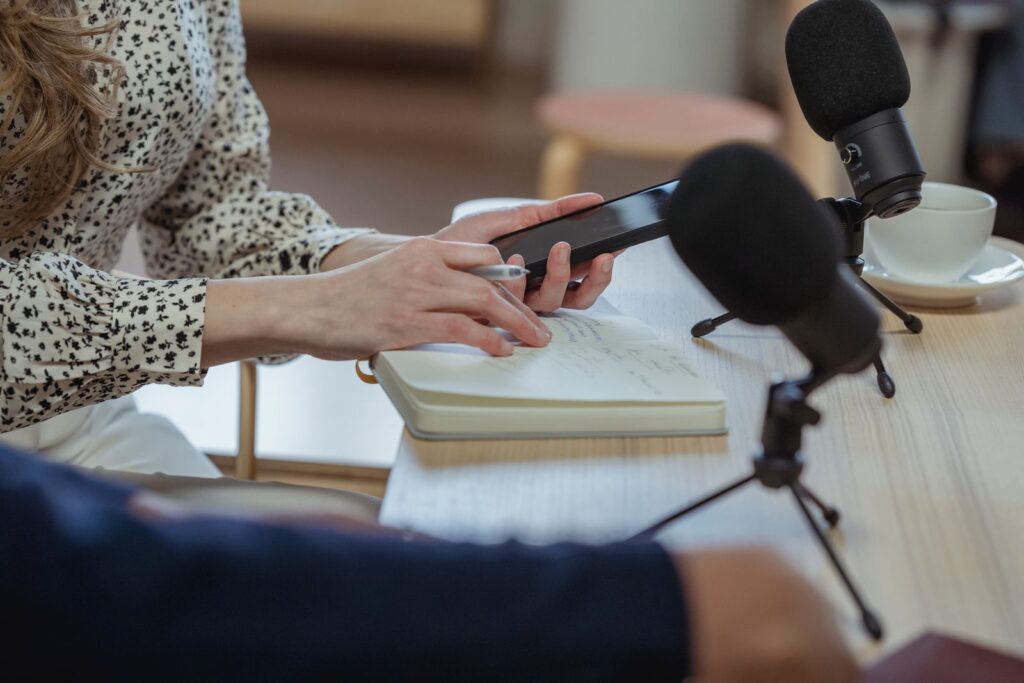
How do you frame your key messages?
A widely used media training approach suggests three messages, each of two or three sentences, that can be said in about 15 to 30 seconds. [3] CDC suggests making your key point in 30 seconds and in fewer than 90 words, and keeping answers at a press briefing under two minutes. [1]
A message alone is not enough; it needs proof: a fact, a figure, a credible independent authority or a short real-world story. [3] Avoid jargon, which complicates communication and can come across as arrogant. [2]
Hypothetical example: a municipality’s message map
A municipality is facing complaints about delays in issuing building permits, and its director has been invited onto a radio programme.
| Message | Proof |
|---|---|
| We acknowledge the delay and know its cause | Applications doubled after the new master plan was launched (figure from municipal records) |
| We have taken three specific steps | Extra staff, an online window and a weekly review of overdue cases |
| Customers can now track their application | Tracking steps in the app and the contact centre number |
The figures in this map come from the organisation’s actual data on the day of the interview, not from memory. And every question in the interview, whatever its direction, should find its way to one of these messages.
How should you practise?
Write 20 to 25 likely questions, starting with the ones you dread, and prepare an answer to each that leads to your messages. [3] Then practise with your organisation’s media officer, including aggressive, rapid-fire questions. [1]
Learn the ideas and facts, not word-for-word answers. [1] It helps to rephrase each approved message in two or three ways, because repetition aids retention. [4] If possible, film the practice on camera and play it back, which is how professional interview training courses work. [5]
During the interview: bridging and tough questions
Bridging means answering the question briefly, then moving to your message with a transition phrase. [4] Examples include “What’s important to remember is…”, “What I’m really here to discuss is…”, “It’s our policy not to discuss this, but what I can tell you is…” and “What I think you’re really asking is…”. [1] Bridging does not mean ignoring the question: the aim is to meet the journalist’s need for news while advancing your organisation’s goals at the same time. [5] So before the interview, ask yourself what in your messages is genuinely newsworthy.
Avoid saying “no comment”. Instead, explain why you cannot answer: the matter is under investigation, no decision has been made, or you are not the right person. [1] Say “I don’t know” if you don’t, and commit to coming back with the answer. [2]
| Situation | Appropriate response |
|---|---|
| Loaded question with emotive words | Restate it neutrally; do not repeat its words |
| "Is it A or B?" | Reject both if neither is valid; give your message |
| An allegation you have not checked | "I would need to verify that before responding" |
| Rapid-fire questions | Ask to answer them one at a time |
| Silence after your answer | Do not fill it; wait for the next question |
| Journalist hands you a report | Do not take it; return to your message |
Remember two rules without exceptions. First, there is no such thing as “off the record”, so say nothing you would not want to see published the next day. [1, 2] Second, talk about what you know, not what you think, and do not accept the journalist’s framing of a question if it is misleading; reframe it before answering. [2] If the exchange becomes heated, do not argue with the interviewer or try to embarrass them. [1]
TV, radio and phone interviews
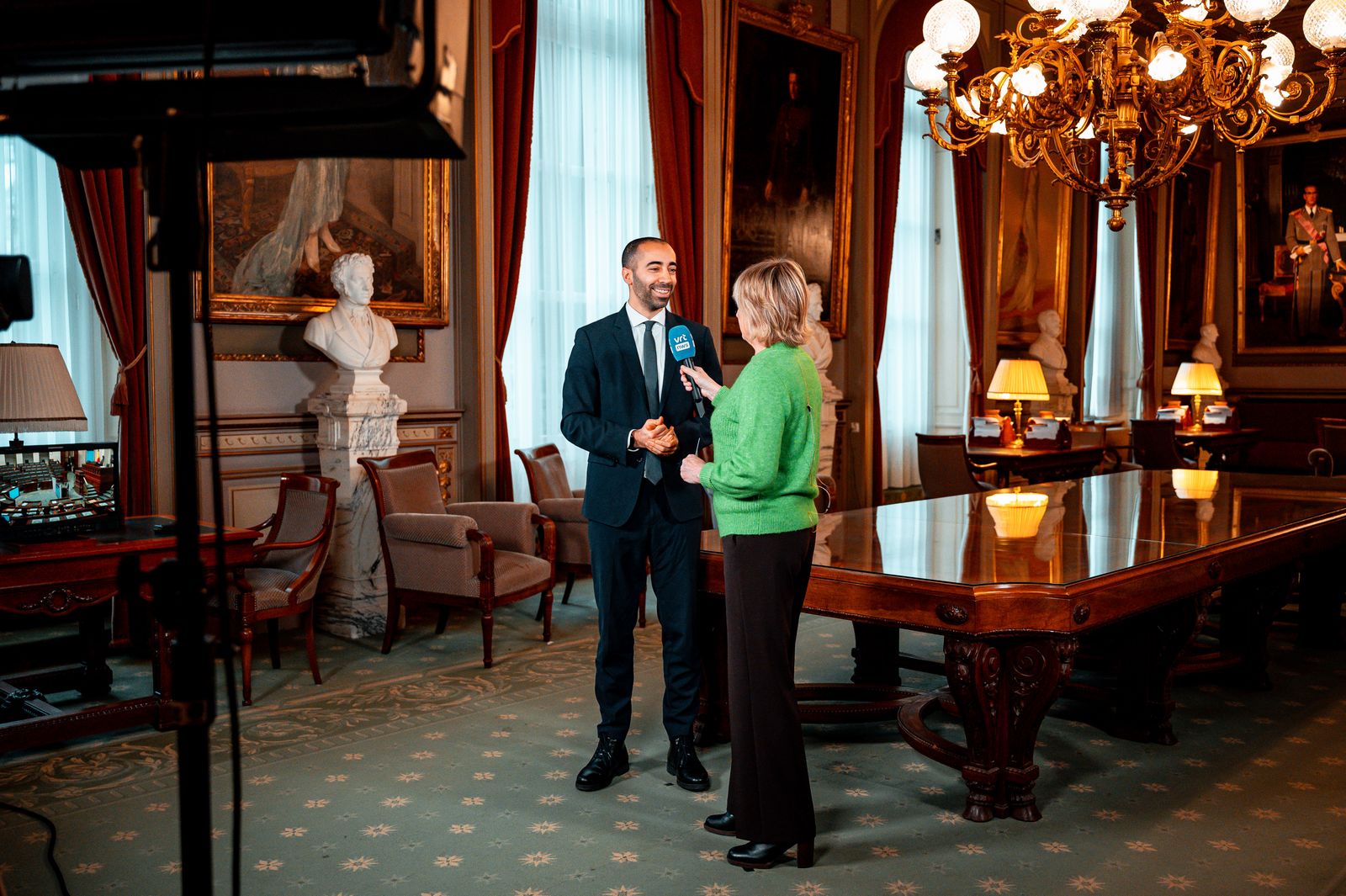
Each medium has its own demands. CDC’s guidance sets out the most important: [1]
- Television: look at the interviewer, not the camera, unless told otherwise, and do not watch yourself on the monitor. Ask for a chair that does not swivel and sit upright. Wear clothing suited to the situation, conservative rather than flashy, avoiding stripes, patterns and shiny jewellery. Remove glasses if you can do so without squinting, and avoid tinted lenses or sunglasses. Slow down and pause between sentences, and practise stopping when asked rather than breaking off mid-sentence. In a recorded interview, ask to redo an answer if you make a mistake; in a live one, correct yourself at once.
- Radio: speak in a normal conversational tone, avoid filler sounds, and remember that rustling paper can be heard. Keep messages succinct and pitched at the ordinary listener’s level, avoiding long scientific explanations. Do not begin with “As I said before”, because listeners may not have heard it.
- Phone: confirm the caller’s identity and call back to verify if necessary. Choose a quiet room, keep your written messages in front of you, and consider standing to sound more alert. At the end, ask the journalist what they understood to make sure your key points landed as intended.
After the interview
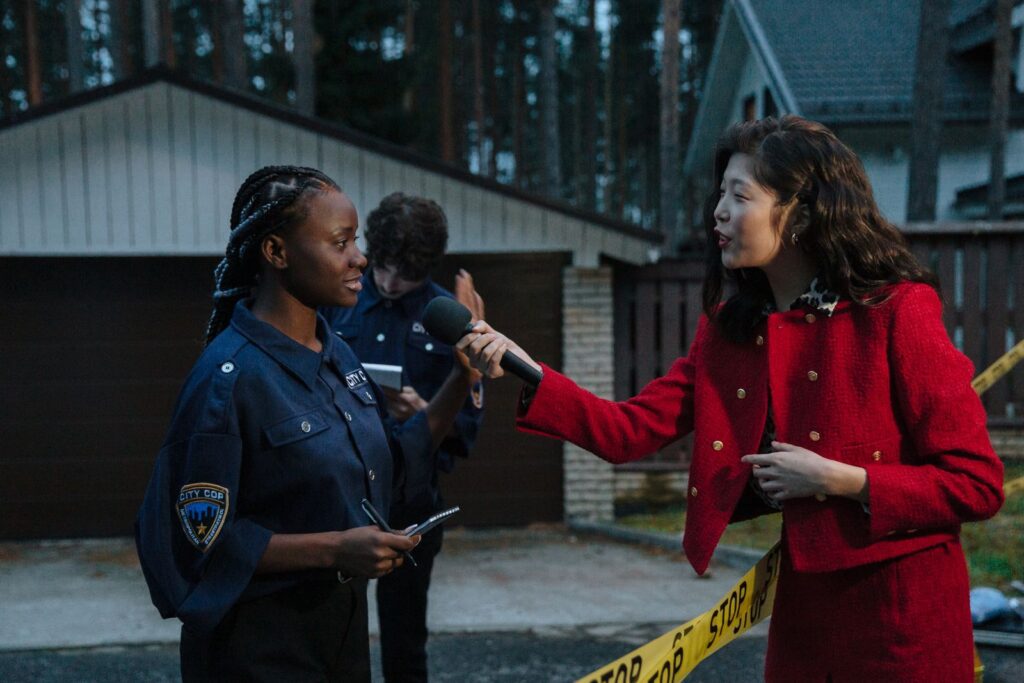
The interview continues until the journalist and all their equipment have left, and the microphone is always on, even during sound checks. If you have finished answering and the microphone stays in front of you, do not add to or repeat your answer. [1]
Do not ask to review the article before publication; offer to clarify facts instead. If you are shown a draft, correct factual errors only. [1] Follow up on any questions you promised to answer. [2] If a factual error is published, contact the journalist calmly and provide the correct, documented information. Then sit down with the media team to review what happened: which messages landed, which question threw you, and what you will change next time.
Interview-day checklist
- The three messages are written down, each with up-to-date proof.
- Answers to the five hardest questions have been rehearsed out loud.
- Your name and job title are confirmed with the journalist, and the title is short and clear. [2]
- Supporting papers are ready to hand over after the interview.
- Your organisation’s approval to appear, and the limits of what can be said, are clear.
- Your phone is on silent, and both sides know the agreed finish time.
Conclusion
Media training is not about learning to dodge questions; it is about learning to answer them without losing your message. Prepare three messages with their proof, ask the journalist before you agree, rehearse the hardest questions, and treat every word as published.
Frequently asked questions
Can I ask the journalist for the questions before the interview?
You can ask which subjects the interview will cover and ask for it to be limited to them, as well as its format, length and who else has been interviewed. [1]
What should I say if I do not know the answer?
Say you do not know, or that it is not your area of expertise, and commit to finding the answer and sending it later. Do not guess or claim expertise you do not have. [1, 2]
What is the alternative to saying "no comment"?
Explain why you cannot answer, for example because the matter is under investigation or no decision has been made yet. [1, 4]
Am I entitled to review the article before publication?
Do not ask to review the article; offer to clarify facts while it is being written instead. If you are shown a draft, correct factual errors only, not differing viewpoints. [1]
How long should an answer be in a TV interview?
Practise phrases of 10 to 20 seconds, and aim to make your key point in 30 seconds and in fewer than 90 words. [1]
References
- U.S. Centers for Disease Control and Prevention (CDC). CERC: Spokesperson (2014)
- U.S. Centers for Disease Control and Prevention (CDC). Spokesperson Preparation (2024)
- PRSA (PRsay). Media Training: A 5 Step Process to Drive Message Development and Interview Preparation (2012)
- PRSA (Public Relations Tactics). Back to Basics: Media Training Never Goes Out of Fashion (2012)
- Chartered Institute of Public Relations (CIPR). Handling media interviews (training course outline) (2024)
- Al Bayan. 6 executive guides to support the government media system in Ajman (in Arabic) (2026)
Recommended programmes