- A facility security assessment starts with risk, not equipment: the value of the asset, the severity of the threat and the size of the vulnerability decide where effort goes.
- Protection is built in three layers, outside the site boundary, between the boundary and the building, and the building and its contents, so an attacker meets cumulative barriers.
- CPTED makes design itself a security tool through natural surveillance, guided movement, clear territory and maintenance, and has international guidance in ISO 22341:2021.
This article is general guidance and does not replace the requirements of the competent security authority in your country or an assessment by a qualified specialist.
What is a facility security assessment, and why start with risk?
A facility security assessment is a structured examination that answers one question: what are we protecting, from what, and where are the gaps? The common mistake is to start with an equipment list, more cameras and newer gates, before understanding the risks they are meant to address.
ASIS PAP-2021 treats physical asset protection as a management system: designing, implementing, monitoring, evaluating and maintaining a protection programme for people, property and information. [1] The assessment is therefore not a one-off event but part of a continuing cycle.
The FEMA 426 method gives a practical formula for setting priorities: risk = asset value × threat rating × vulnerability rating, with each factor scored from 1 to 10 and people treated as the most important asset in any building. [4]
Do not score the threat on impression alone. FEMA 426 rates threats on five factors: whether a hostile party exists, its capability, the history of similar incidents, its intention, and whether it is actually targeting the facility. [4] A jewellery shop in a mall and an archive warehouse in an industrial area may hold assets of similar value, but their threat factors are entirely different, and so is the right response.
- 1AssetsPeople, property, information and their value
- 2ThreatsWho might target the site, with what capability
- 3VulnerabilitiesSite walk-through of every layer
- 4RiskA score for each threat against each asset
- 5MitigationGreatest benefit for the cost
- 6ReviewOn change and after incidents
What is the regulatory reference in the GCC?
Security requirements for facilities are set by each country, and sometimes each emirate; there is no single GCC rule. In Dubai, for example, Law No. (12) of 2016 regulates the security industry and gives the Security Industry Regulatory Agency (SIRA) the power to set and update standards and specifications, follow up compliance and license security service providers. [6]
The law defines “vital sectors”, naming banks, money exchange establishments, gold and jewellery shops, hotels, shopping malls and hospitals among them, and leaves the security requirements and technical specifications for these sectors and for major compounds, and the security requirements for public events, to the Implementing Bylaw. [6] Fines range from AED 10,000 to AED 500,000 and double for a repeat violation within a year, up to a maximum of AED 1 million. [6]
Outside Dubai, and in the other GCC states, check with the competent security authority and your sector’s requirements before relying on the assessment’s conclusions.
The three layers of defence
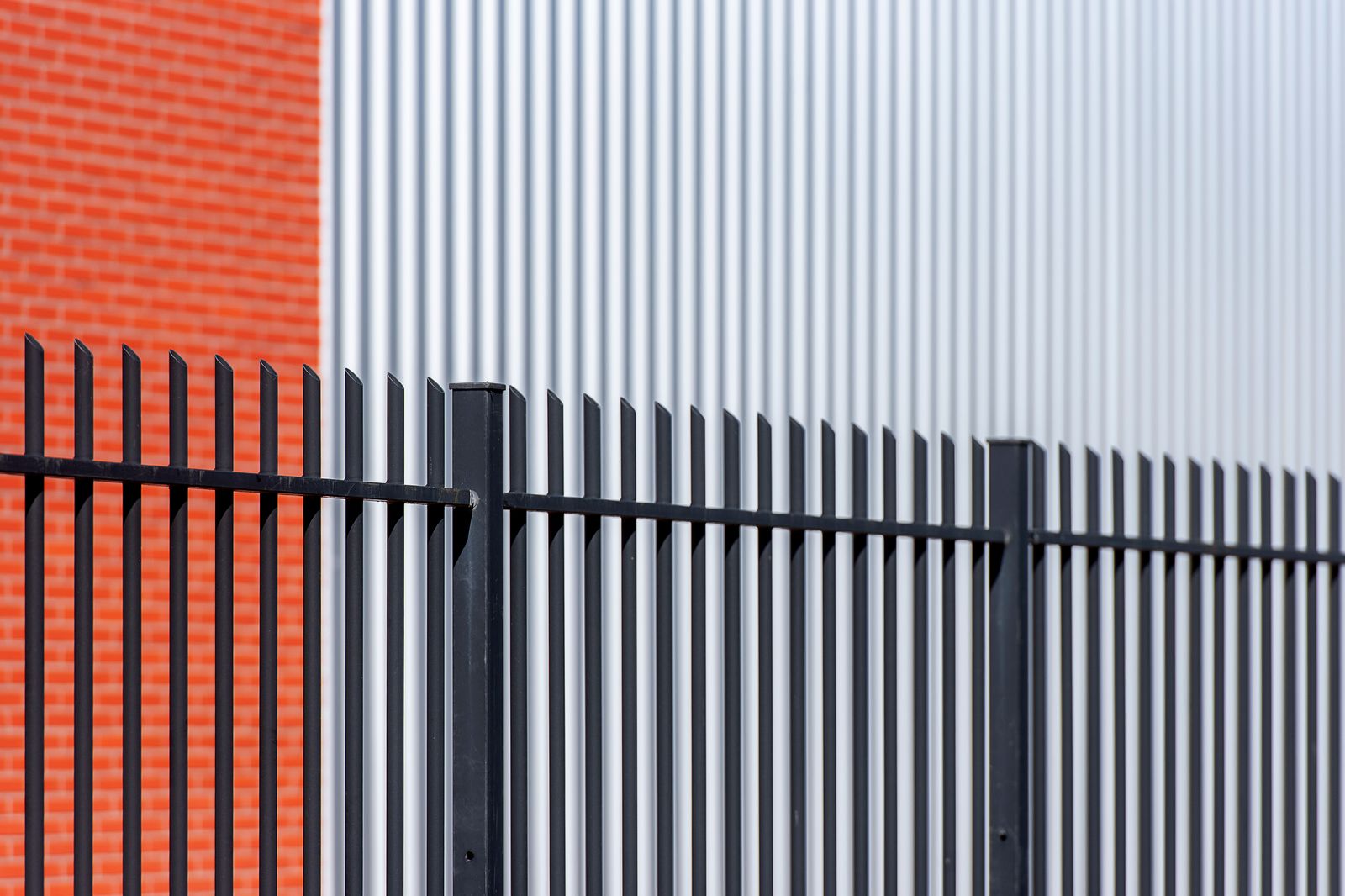
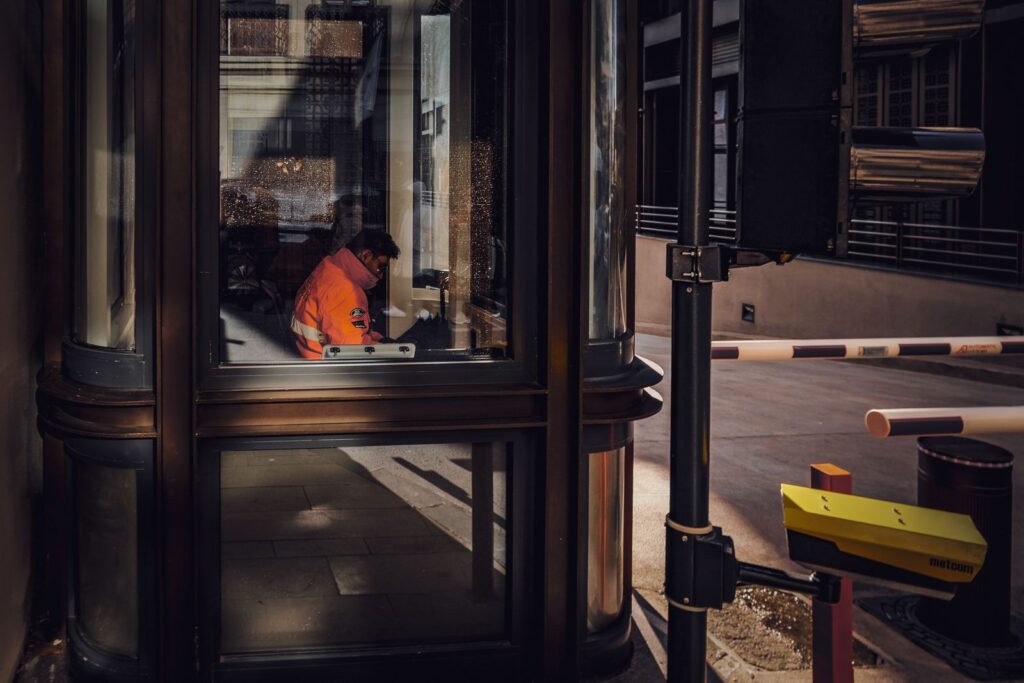
FEMA 430 divides a facility into three layers of defence: the first outside the site boundary or defended perimeter, the second between that boundary and the building or other protected assets, and the third the building envelope, structure and interior assets. [3] The idea is defence in depth: cumulative barriers that an attacker must penetrate one after another. [3]
Each layer has a job. You can read them through FEMA 426’s four aims: deter, by making the target hard to reach or defeat; detect, using monitoring and security response to identify the threat; deny, by minimising or delaying damage; and devalue, by making the target of little value to an attacker. [4] If the assessment finds nothing that serves detection in the second layer, for instance, that is a gap even if the building itself is hardened.
The perimeter and the site: what to check
In the first and second layers, focus on four questions:
- Standoff: how close can an uninspected vehicle get to the building? Each additional increment of standoff gives progressively more protection. [4]
- Where inspection happens: vehicle and pedestrian access control and inspection should take place as far from the facility as possible, not at its door. [4]
- Number of entrances: the aim is at least two access points, one for passenger vehicles and one for delivery trucks. [4]
- Barriers: passive barriers such as walls, bollards, planters and berms, and active ones such as retractable bollards and rising wedges, reduce the chance of vehicle penetration; the site inside the barrier becomes a controlled access zone in which the design of entry control points is critical. [3]
CPTED: design that prevents crime
Crime prevention through environmental design (CPTED) uses site and building design to reduce crime and the fear of crime. ISO has published international guidelines for it in ISO 22341:2021, developed by technical committee ISO/TC 292, which apply to new and existing built environments and to organisations of any type or size. [2]
The City of Las Vegas CPTED Handbook sets out five principles that translate directly into assessment questions: [5]
| Principle | Assessment question |
|---|---|
| Natural surveillance | Can staff and passers-by see entrances and car parks without obstruction? |
| Natural access control | Do paths and fences guide visitors to one clear entrance? |
| Territorial reinforcement | Is the line between public and private space clear through landscaping, fencing or signs? |
| Activity support | Are spaces used legitimately, putting eyes on them? |
| Maintenance | Are lighting, fences and planting in a state that serves their purpose? |
A practical rule from the same handbook is the “2ft/6ft rule”: trim shrubs to 2 feet (about 60 cm) or less and raise tree canopies to 6 feet (about 1.8 m) or more, reducing hiding places and improving visibility. [5] Lighting should be uniform, avoiding pockets of shadow and glare. [5]
The third layer: controlling access to the building
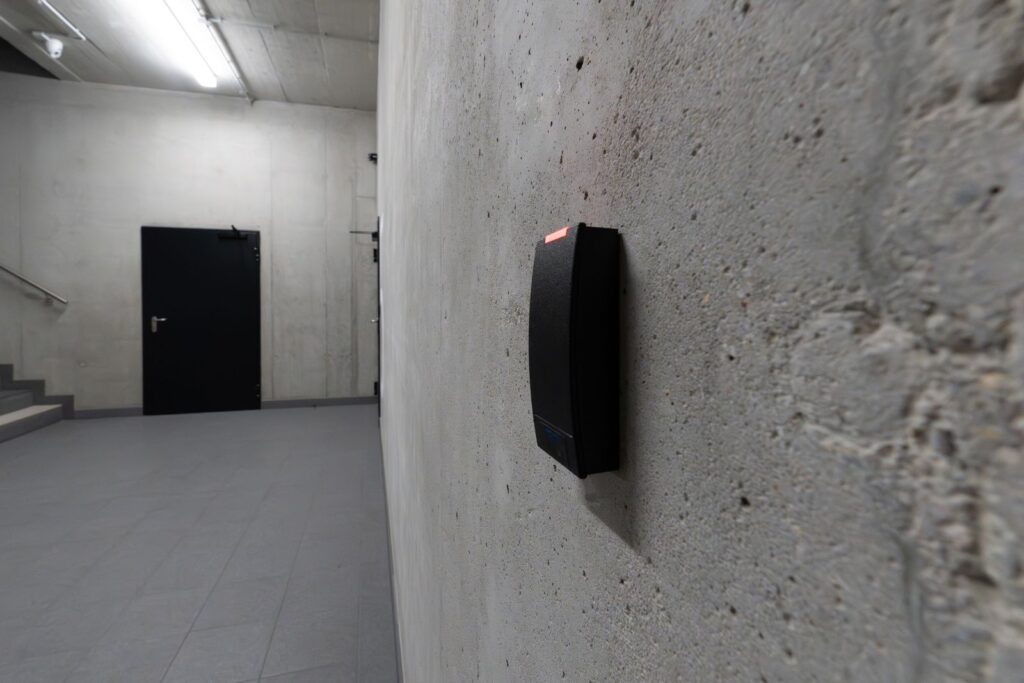
Inside the building, the question shifts from “who is approaching?” to “who can reach what?”. In the assessment, check:
- Zoning: public (reception), staff and restricted areas (server rooms, safes, control rooms), with access rights for each zone based on business need.
- Entry points: are there as few as possible, and are entrances fitted with electronic entry control and CCTV coverage appropriate to the facility’s protection level? [4]
- Visitors and suppliers: pre-registration, visible identification, escorts in restricted areas and a separate delivery route.
- Keys and cards: a register for every key and card, immediate cancellation when someone leaves, and periodic review of access rights.
- Response: who sees the alarm, and how many minutes until someone arrives? Detection without response stops nothing.
Hypothetical example: a government service building
With illustrative scores: a service building open to the public, with the public car park directly against its glazed frontage.
- Asset value (staff and visitors) = 8, threat rating from a vehicle in the car park = 5, vulnerability rating = 7 because there is no barrier.
- Risk = 8 × 5 × 7 = 280.
- Proposed measure: planters and fixed bollards along the kerb, and visitor parking moved to the far end, reducing vulnerability to 4, so risk = 8 × 5 × 4 = 160.
The difference between the two figures is what justifies the cost to management; the organisation sets its own acceptance thresholds for each level.
How to write the assessment report
Make the report actionable rather than descriptive. For each layer, record what works well and should be kept, the vulnerabilities ranked by risk score, and for each vulnerability one or more mitigation options with a rough cost, an owner and a deadline. Attach photographs and the site plan with the location of each finding, because a finding without a location does not get fixed.
Reassess when threats or building use change and after any incident, within the cycle of design, implementation, monitoring, evaluation and maintenance on which the ASIS standard is built. [1]
Conclusion
A good facility security assessment starts with assets and threats, works through the three layers from outside the site to the rooms inside, and applies CPTED before buying any equipment. Score the risk before and after mitigation, and write a report that gives every vulnerability an owner and a deadline.
Frequently asked questions
How does a facility security assessment differ from a compliance audit?
A compliance audit checks that predefined requirements are in place. A security assessment starts from likely threats and asset value to identify vulnerabilities and priorities, and may reveal needs that no requirements list mentions.
What is CPTED?
Crime prevention through environmental design: an approach that uses site and building design, lighting and landscaping to reduce opportunities for crime and the fear of crime. ISO has published guidelines for it in ISO 22341:2021.
Are all facilities in Dubai subject to mandatory security requirements?
Law No. 12 of 2016 imposes specific requirements on vital sectors, such as banks, gold shops, hotels, shopping malls and hospitals, and on major compounds and public events, with the details set by the Implementing Bylaw.
How often should a facility be reassessed?
The sources cited here set no fixed interval, but an assessment should be repeated when threats, building use or operations change, after any incident, and at a regular interval set in the organisation's security programme.
References
- ASIS International (via ANSI Webstore). ASIS PAP-2021 Physical Asset Protection Standard (2021)
- International Organization for Standardization (ISO). ISO 22341:2021 Security and resilience — Protective security — Guidelines for crime prevention through environmental design (2021)
- US Federal Emergency Management Agency (FEMA). FEMA 430: Site and Urban Design for Security (2007)
- US Federal Emergency Management Agency (FEMA). FEMA 426: Reference Manual to Mitigate Potential Terrorist Attacks Against Buildings (2003)
- City of Las Vegas. CPTED Handbook
- Government of Dubai, Legislation Portal. Law No. (12) of 2016 Regulating the Security Industry in the Emirate of Dubai (2016)