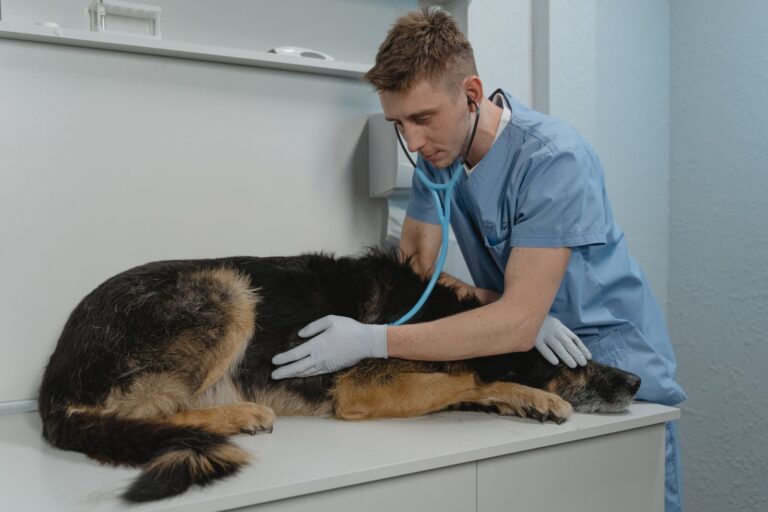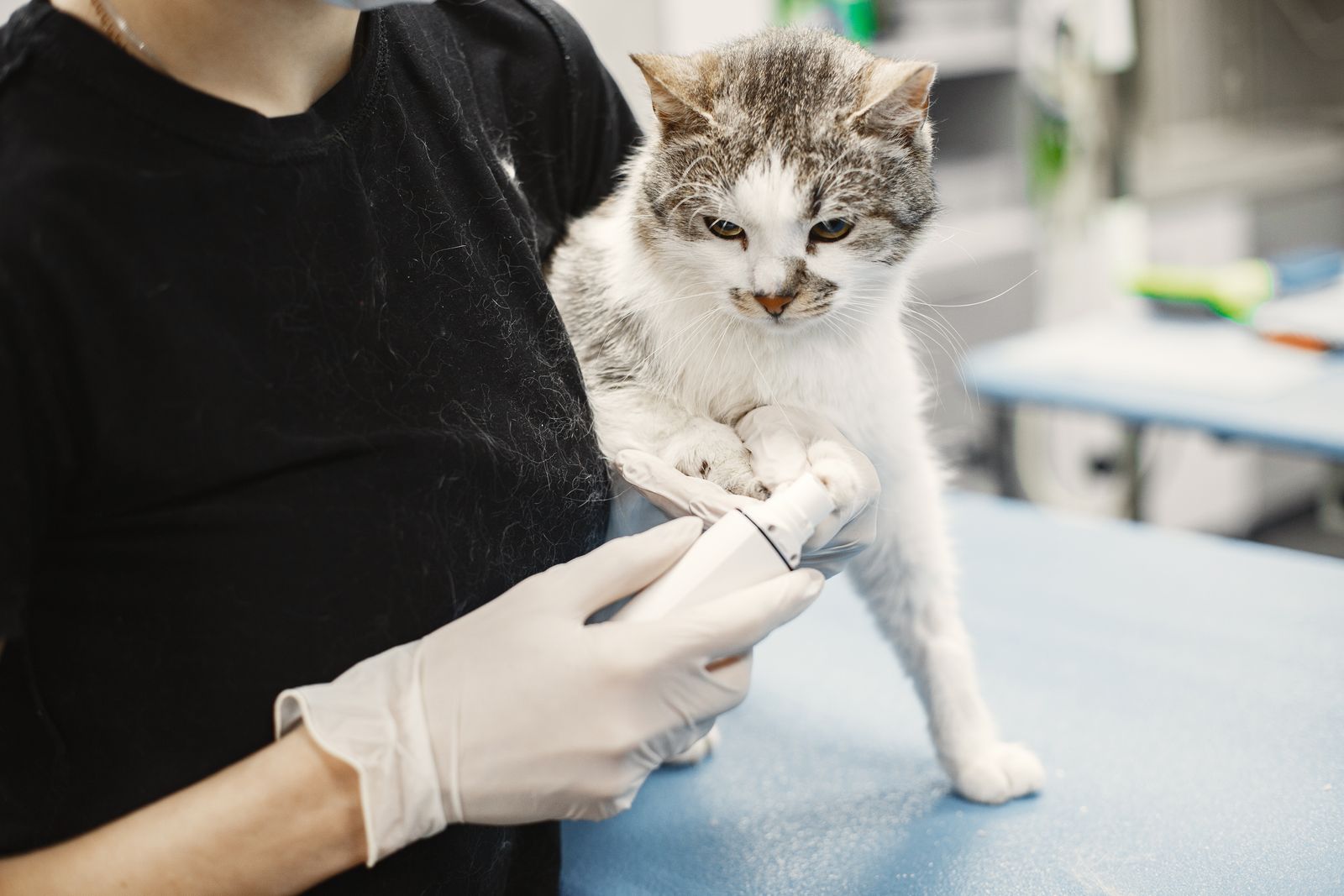
- Pain in cats has traditionally been under-recognised, and structured observation before and during handling reveals what a passing glance misses.
- Each situation has a suitable tool: scales such as the Feline Grimace Scale and Glasgow CMPS-Feline for acute pain, and tools such as the FMPI and Montreal Cat Arthritis Test for chronic pain.
- A score above the intervention level means the vet should review the need for analgesia, not that a prescription is ready-made, and the cat is reassessed after every intervention.
This article is for professional education and does not set a diagnosis, treatment or dose for any individual animal; treatment decisions rest with the attending veterinarian.
Why is pain hard to recognise in cats?
FECAVA’s summary of the 2022 ISFM Consensus Guidelines on acute pain notes that pain has traditionally been under-recognised in cats, and that limited availability of, or experience with, some analgesics can weaken its management. [4] A frightened cat in the clinic may freeze in place and look calm while in pain.
That is why the 2022 AAHA Pain Management Guidelines for Dogs and Cats point out that many behavioural signs can be observed while talking with the client and that, with experience and practice, this need not add time to the examination. [1] The aim is to replace a general impression with structured observation that can be recorded and compared.
What should you observe before and during handling?
AAHA suggests watching smoothness of movement, coat condition and posture before the hands-on examination, how the cat jumps down from the table and how it walks towards its carrier. [1] During palpation or joint flexion, look for tensing, a change in vocalisation or an attempt to move away. [1]
AAHA also points to affective signs such as changes in sociability, mood and tolerance of handling, which often appear when the cat loses access to vertical space. [1] So ask the owner about normal behaviour at home: does the cat still jump to its favourite spot? Has its interaction with the household changed?
Which tool suits which situation?
The choice depends on the type of pain and the purpose of the assessment. For acute or perioperative pain, AAHA lists scales such as the Colorado State University Acute Pain Scale and the UNESP multidimensional scale, as well as the Feline Grimace Scale. [1] For chronic pain, especially osteoarthritis, it describes a six-behaviour screening checklist covering running, jumping up, jumping down, going up stairs, going down stairs and chasing objects, followed by tools for diagnosis and monitoring such as the FMPI and the Montreal Cat Arthritis Test, and CSOM for monitoring only. [1]
| Tool | Pain type | Based on | Note |
|---|---|---|---|
| Feline Grimace Scale | Acute | 5 facial action units | Threshold 4 of 10 |
| Glasgow CMPS-Feline | Acute | Behavioural scale plus facial component | Intervention level 5 of 20 |
| CSU and UNESP | Acute | Observation and palpation | Listed by AAHA for acute pain |
| FMPI and Montreal Cat Arthritis Test | Chronic | Activity and mobility | Diagnosis and monitoring |
| CSOM | Chronic | Activities specific to each cat | Monitoring only |
The Glasgow Composite Measure Pain Scale for cats (CMPS-Feline) has a maximum score of 20 and an intervention level of 5, according to the validation study by Reid and colleagues published in the Veterinary Record in 2017. [3] Choose one tool per context within the clinic and stick with it for successive assessments of the same animal so that comparisons mean something.
How do you use the Feline Grimace Scale correctly?
Developed at the Université de Montréal to assess acute pain from facial expression, the scale uses five action units: ear position, orbital tightening, muzzle tension, whisker position and head position. Each is scored 0, 1 or 2, giving a maximum of 10. [2]
The conditions of use are part of the tool, not a footnote:
- Observe the cat undisturbed for 30 seconds before scoring. [2]
- If the cat is grooming, eating or vocalising, wait until it has finished. [2]
- Do not wake a sleeping cat to score it; wait until it wakes. [2]
AAHA notes that the scale requires initial training, can be used without palpation, and has an owner version available as an app and online. [1]
What does the score mean, and who decides?
According to the scale’s reference site, a score of 4 or more out of 10 suggests the veterinarian should consider analgesia, taking into account the cat’s physical status and any drugs already given. If the score is 4 and there is doubt about further analgesia, the site suggests reassessing after 10 to 15 minutes. [2] In other words, the score opens a clinical review; it does not set a drug or a dose.
The nurse’s or technician’s role is to observe, record and report, not to diagnose the cause of the pain or choose the treatment. AAHA notes that acute pain is assessed before surgery and at regular intervals afterwards. [1] So the vet sets a reassessment time after each intervention, and the same scale is used to measure the response.

Hypothetical example
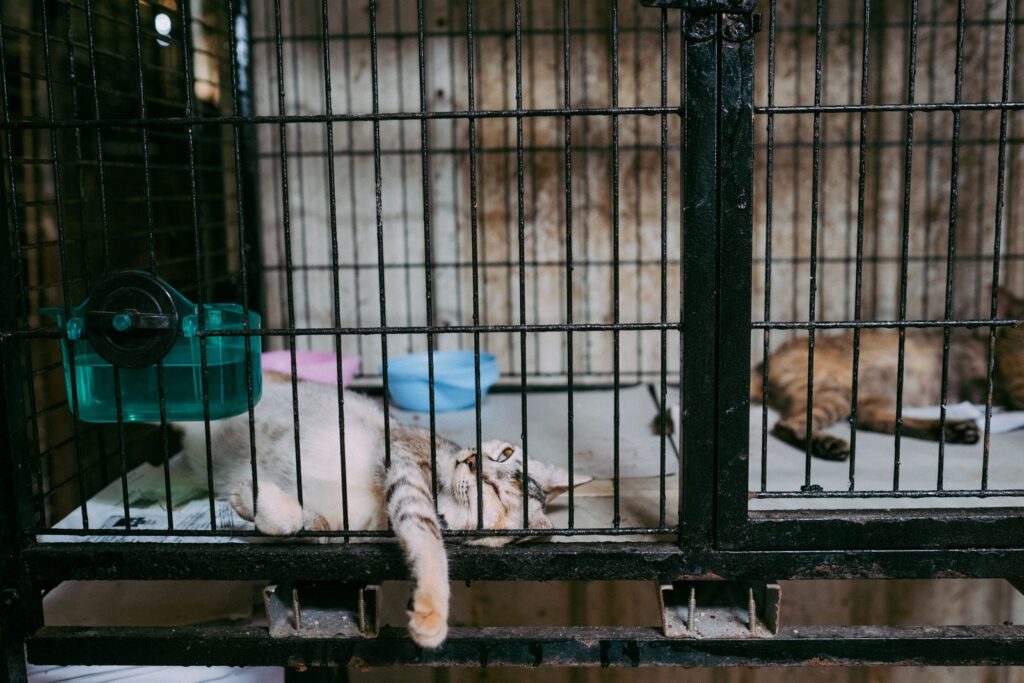
A cat recovering in a veterinary clinic after a surgical procedure looks calm to anyone walking past its cage. The nurse observes it undisturbed and records a change in head and ear position compared with the previous assessment, giving a score on the clinic’s chosen scale above the intervention level. She notes the time, context and last medication given, and reports to the vet rather than interpreting the cause herself.
The vet reviews the case, decides on the appropriate intervention and sets a reassessment time on the same scale. At that time the nurse records the new score in the same field of the record, so the response can be seen rather than guessed.
How should chronic pain and the owner’s role be handled?
In chronic pain, signs change over months rather than hours, so AAHA treats owner input as central and notes a gap between owners’ awareness of pain and their recognition of behavioural change, which education can narrow. [1]
Ask the owner for home videos that capture the whole cat, the complete behaviour and adequate lighting. [1] AAHA notes that chronic pain patients are generally re-evaluated every 3 to 6 months, or sooner if problems arise. [1] Explain to the owner what to watch for, in line with the vet’s instructions, and when to call the clinic.
How do you standardise use of the tool across the team?
AAHA recommends that the whole team understands the signs and principles of pain and shares a common approach to assessment and client communication, suggests that technicians act as case coordinators liaising with owners and vets, and supports in-house education on pain scales. [1]
- 1ObserveUndisturbed, in a known context
- 2RecordTool, score, time and context
- 3ReportTo the vet at intervention level
- 4DecideVet reviews case and treatment
- 5ReassessSame tool, at a set time
In practice: train the team on recorded teaching cases before going live, compare scores from more than one assessor on the same case to expose differences in interpretation, give the record fixed fields for tool, score, time, context and medication, and agree who reports and when the intervention level is reached.
What common mistakes weaken the value of the score?
Most mistakes concern how the scale is used rather than the scale itself:
- Scoring straight after handling: the facial scale assumes the cat has been observed undisturbed before scoring, [2] so do not score while holding the cat or immediately after taking it out of the cage.
- Waking a sleeping cat: the scale’s reference site advises waiting until the cat wakes rather than rousing it to score. [2]
- Switching tools between assessments: comparing a score on one scale with a score on another says nothing about the trend, because each scale has its own range and intervention level. [2, 3]
- Recording the number without context: a score without time, medication and observation conditions cannot be interpreted at the next assessment.
- Treating a low score as final: the vet decides with the physical status and history in mind, and the views of the team and owner remain part of the picture. [1]
Conclusion
Make feline pain assessment a structured observation recorded at every visit, choose the tool that fits acute or chronic pain and respect its conditions of use. The score opens a clinical decision for the vet, and its real value lies in comparing successive assessments made with the same tool.
Frequently asked questions
Does a quiet or still cat mean it is not in pain?
Not necessarily. AAHA notes that pain can show as changes in sociability, mood and tolerance of handling, so stillness is interpreted alongside the case, history and the owner's observations. [1]
Is facial expression alone enough to assess pain?
The Feline Grimace Scale is a valid tool for acute pain, but it is used according to its instructions and within the clinical context, the cat's physical status and the drugs already given. [2]
Is the same scale used for acute and chronic pain?
No. Acute pain has scales such as the FGS, Glasgow CMPS-Feline, CSU and UNESP; chronic pain, especially osteoarthritis, has tools such as the FMPI, Montreal Cat Arthritis Test and CSOM. [1, 3]
Does the score determine the drug directly?
No. The intervention level means the vet reviews the need for analgesia based on physical status and previous drugs, followed by reassessment. [2, 3]
Can the owner take part in pain assessment?
Yes. AAHA treats owner input as central for chronic pain and suggests home videos that show the whole cat in adequate light. [1]
References
- Journal of the American Animal Hospital Association, 58(2):55–76. 2022 AAHA Pain Management Guidelines for Dogs and Cats (2022)
- Université de Montréal. About the Feline Grimace Scale (2019)
- RCVS Knowledge. Definitive Glasgow acute pain scale for cats: validation and intervention level (Reid J, Scott EM, Calvo G, Nolan AM. Veterinary Record 180(18):449–452) (2017)
- FECAVA. 2022 ISFM Consensus Guidelines on the Management of Acute Pain in Cats (2022)