- A SWOT analysis is only useful if it starts from a specific decision and ends with options from which priorities are chosen, each with objectives, owners and dates.
- The TOWS matrix sets internal factors against external ones, producing four types of option instead of four separate lists.
- Every approved option is tied to a SMART objective, an activity, an owner and an indicator, and the plan is reviewed at least once a year.
Why does the SWOT analysis end up in a drawer?
Many planning teams know the scene: a lively workshop, a board full of notes in four boxes, then a file attached to the strategic plan that nobody opens again. The problem is not the tool but stopping at the listing stage. A SWOT analysis maps the internal and external factors that may help or harm a project; it is a picture of the situation, not a decision. [1]
The Community Tool Box warns of another risk: because the analysis reflects the current situation, it can be used to justify a course management has already chosen rather than to open up new options. [2] The analysis therefore needs a clear starting point, the decision required, and an end that connects to the plan: approved options with an owner and a date.
Start with the decision question, not the four boxes
Before drawing the boxes, write in one line the decision the analysis will serve. For example: “What are the department’s priorities for the next strategic cycle?” or “Should we launch a new service or improve existing ones?” That line becomes the test for every factor later: does it bear on this decision or not?
Then set the level of analysis, which may be the whole organisation, a department, a programme or a specific process. [1] Involve a range of stakeholders: an employee, customer or partner may hold key information about an opportunity or threat, and input from outside the team tests whether its strengths and weaknesses look the same from the outside. [2]
How do you run the workshop?
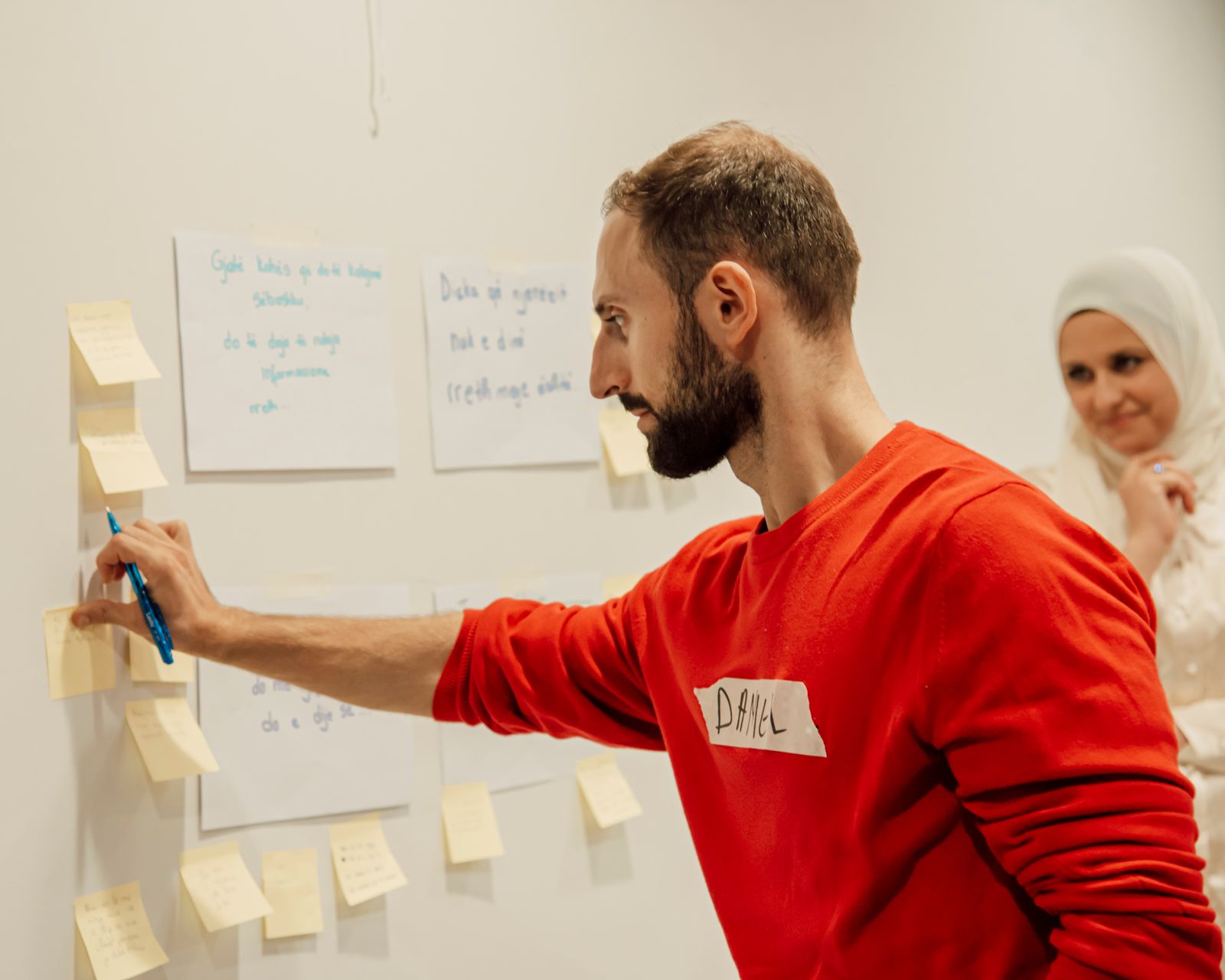
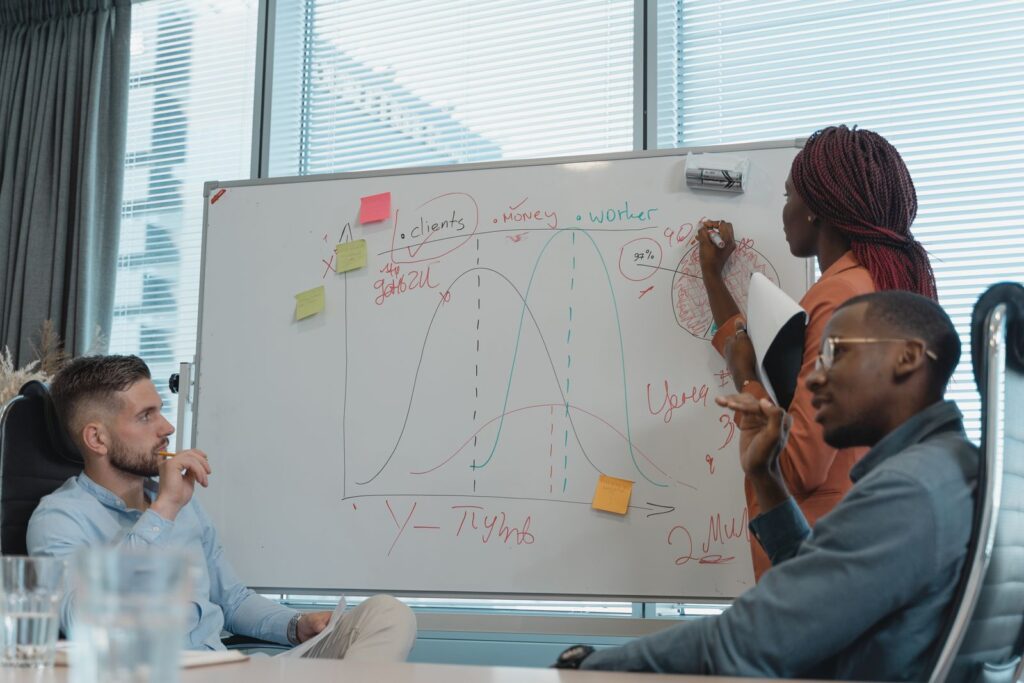
The Community Tool Box suggests a simple format: a facilitator with good listening and process skills, and a recorder who captures points on a screen or board everyone can see. [2] The facilitator explains the method and its purpose, then participants split into small groups of three to ten people, each spending 20 to 30 minutes brainstorming without ruling out ideas, before cutting their list down to the most important points. [2]
Everyone then reconvenes to pool results and discuss them until there is consensus on the key items, relating them to the vision, mission and goals. [2] Add one practical rule: do not close the session until you have named who will turn its output into options, and when they will present them to the decision-maker.
How do you fill the boxes with verifiable statements?
The basic rule: strengths and weaknesses are internal factors the organisation can influence; opportunities and threats are external factors in its environment. [1] To capture external factors, use a PESTLE analysis of the external environment, [4] or at least consider political, economic, socio-cultural and technological influences. [1]
The Minnesota Department of Health advises verifying or quantifying statements wherever possible, and taking an outside view even when writing internal factors. [1] The table below shows the difference between a statement that leads nowhere and one that leads to a decision:
| General statement | Verifiable statement |
|---|---|
| Excellent team | Service staff have long experience in the most requested transactions |
| Weak digital transformation | The share of transactions still submitted on paper and keyed in by hand, as shown in the transaction log |
| Market opportunities | A new digital platform allows services to be connected to it |
| Competition | Customer expectations of turnaround times are rising |
A good statement says what the factor is and where it shows up, and someone else could check it against the organisation’s data.
Rank the factors before building options
A long list needs prioritising. [1] The simplest method is for the team to score each factor on two questions: how much does it affect the decision at hand, and how strong is the evidence for it? Keep the highest-scoring factors in each box and move the rest to an appendix.
Do not drag this stage out. The strategic planning guide from the Association of State and Territorial Health Officials (ASTHO) warns against analysis paralysis and recommends that the team decide when it has enough information and move on. [3]
From lists to options: the TOWS matrix
This is where the real shift happens. The TOWS matrix, introduced by Weihrich in 1982, sets internal factors against external ones, so that each cell asks a specific question about how one factor can be used to deal with another. [5]
| Factors | Opportunities (O) | Threats (T) |
|---|---|---|
| Strengths (S) | SO: a strength seizes an opportunity | ST: a strength limits a threat |
| Weaknesses (W) | WO: an opportunity fixes a weakness | WT: reduce weakness, avoid threat |
- SO (maximise): how can we use a strength to seize an opportunity?
- WO (develop): how can we use an opportunity to overcome a weakness?
- ST (overcome): how can we use a strength to limit a threat?
- WT (reduce): how can we minimise a weakness and avoid a threat? These options are usually defensive. [4, 5]
When assessing the options, do not simply count the matches between factors: relationships differ in value and need individual judgement. Then test each option against the organisation’s mission and vision. [5]
Hypothetical example: a government service centre
Hypothetical example: a service centre in a Gulf government entity is preparing its plan for the next three years. After ranking, four main factors remain: staff with experience in the most requested transactions (strength), paper transactions keyed in by hand (weakness), a government digital platform that services can connect to (opportunity), and rising expectations of turnaround times (threat).
The matrix produced options including: involving experienced staff in designing the digital journey for transactions (SO), moving the most requested paper transactions onto the platform (WO), asking experienced staff to simplify the procedures for the most requested transactions to cut turnaround times (ST), and stopping duplicate paper routes (WT). The team chose only two options for the first year and wrote an objective for one of them: convert the five most requested transactions into digital services within 12 months, owned by the services department, with an indicator for the share of digital requests reviewed every quarter.

How do you link options to priorities, objectives and the action plan?
The ASTHO guide places the environmental scan in a phase before priority-setting, and asks that priorities emerge from the themes of the scan and be tested against the mission and vision. [3] The chain then runs as follows:
- 1Decision questionWhat will this analysis help us decide?
- 2Ranked factorsVerified statements ranked by impact
- 3TOWS optionsInternal set against external
- 4Few prioritiesTwo or three to start
- 5SMART objectivesMeasurable result and a date
- 6Action planActivity, owner, resources, deadline
- 7Indicators and reviewRegular tracking, annual review
- Few priorities: focus on two or three at the start, and ask of each: is it necessary to meet the central challenge, and are the priorities, taken together, enough to meet it? [3]
- SMART objectives: plan backwards from the desired end state, setting milestones and specific, measurable objectives. [3]
- Action plan: for each objective, activities, resources, responsible parties and deadlines in a shared document, with a lead for each strategy. [3]
- Indicators and review: for each priority, set metrics, data sources, a person responsible for tracking and how often, and review progress at least once a year. [3]
The same sequence appears in the Arabic strategic planning guide published on the OMSAR website, where SWOT sits within the diagnosis of the current and desired situation, followed by priorities, SMART objectives, performance indicators and the action plan. [4]
Checklist before approving the analysis
- Is there one line stating the decision the analysis serves?
- Is every factor a specific, verifiable statement?
- Are internal and external factors correctly separated?
- Have the factors been ranked, leaving only the most important in each box?
- Have options been generated from all four TOWS cells, and a small number chosen?
- Does every approved option have an objective, an owner, an indicator and a review date?
Conclusion
A SWOT analysis is a listing tool; its value lies in what comes after it. Start with the decision question, write verifiable factors and rank them, generate options with the TOWS matrix, then tie each approved option to an objective, an owner, an indicator and a review date.
Frequently asked questions
What is the difference between a SWOT analysis and a TOWS matrix?
A SWOT analysis lists internal strengths and weaknesses and external opportunities and threats. A TOWS matrix pairs those factors with each other to generate strategic options, such as using a strength to seize an opportunity.
Is a SWOT analysis only done for the whole organisation?
No. It can cover the whole organisation, a department, a programme or a specific process. What matters is that the scope is clear before you start.
How many factors should go in each box?
There is no fixed number, but a long list needs prioritising. Keep the factors with the greatest bearing on the decision at hand and move the rest to an appendix.
Who should take part in a SWOT analysis?
The planning team and programme managers, together with representatives of staff, customers and partners, because people outside the team see strengths and weaknesses from a different angle.
When should a SWOT analysis be repeated?
At each planning cycle and whenever the environment changes significantly, with progress against the plan reviewed at least once a year.
References
- Minnesota Department of Health. SWOT Analysis
- Community Tool Box, University of Kansas. Section 14. SWOT Analysis: Strengths, Weaknesses, Opportunities, and Threats
- Association of State and Territorial Health Officials (ASTHO). Organizational Strategic Planning Guide (2025)
- EU-funded technical assistance project, published on the OMSAR website, Lebanon. Strategic Planning Guide (training programme toolkit, Arabic)
- Marián Gogola, University of Žilina. TOWS
Recommended programmes